



A complete reference for homeowners, designers, and builders specifying modern vent covers: what makes a grille "architectural," how the OKUN line is built, and where it belongs in a contemporary home.
In One Paragraph
What is an architectural grille?
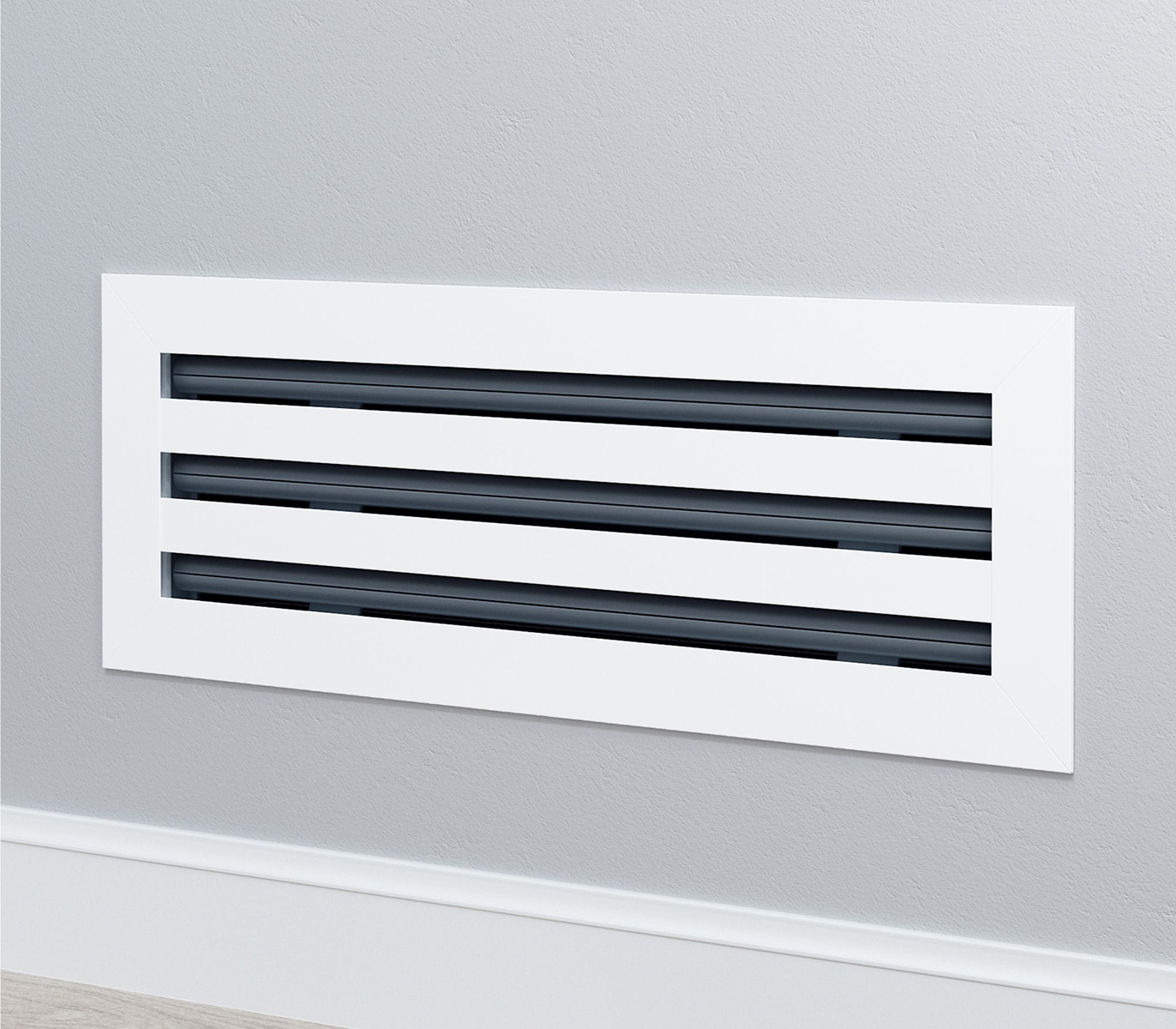
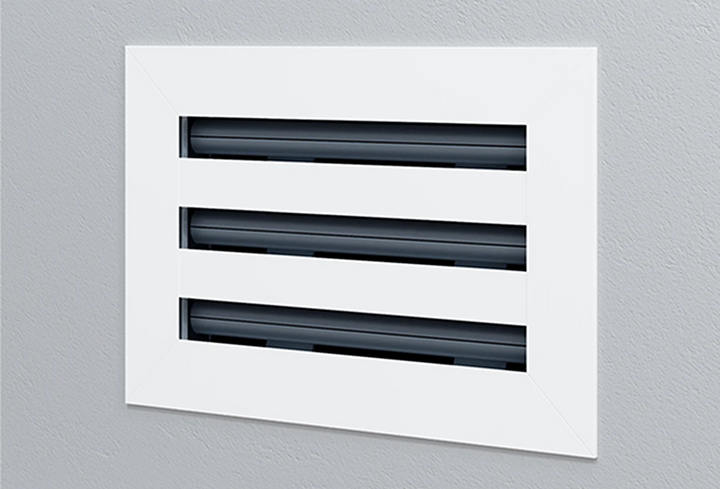
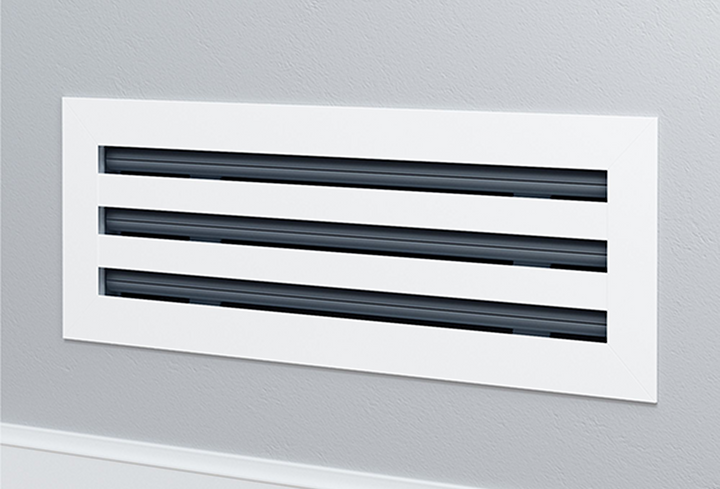
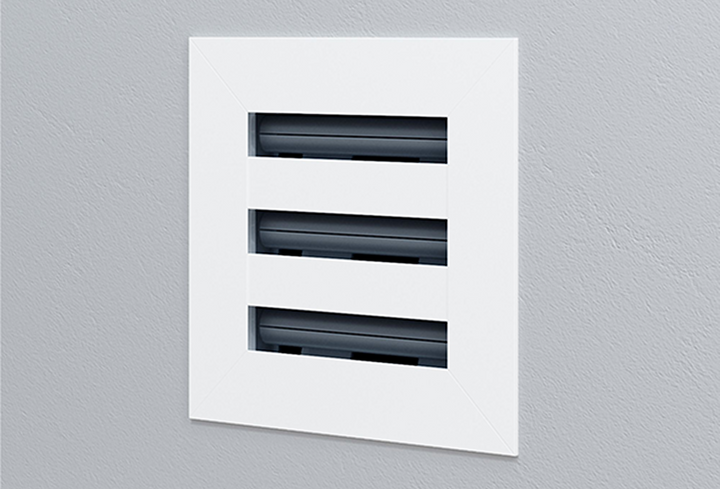
An architectural grille is a vent cover engineered as a finish detail, not a stamped utility part. It is made from powder-coated aluminum (not plastic), uses concealed mounting (no visible screws), sits flush with the surrounding surface, and is offered in linear slot, square, or standard rectangular profiles.
OKUN architectural grilles range from $35.90 to $95.90 across 20 standard sizes, in matte white, for wall and ceiling applications. They are dual-function (supply and return), DIY-installable in under 15 minutes, and designed to replace builder-grade plastic registers without the cost of a custom commercial specification.

The 200-square-inch problem hiding in plain sight
Look up.
Somewhere on your ceiling, or your wall, there's a stamped white plastic louver, collecting dust around four obvious screws. It's been there since the house was built. You stopped seeing it years ago. So did everyone else.
Until you renovated the kitchen. Or laid the new floors. Or finally got the lighting right. And suddenly, that builder-grade vent looks like exactly what it is: the cheapest piece of hardware in the room.
Architectural grilles are the correction. And once you specify them, you cannot unsee the alternative.
What does "architectural" actually mean?
The word gets thrown around. In the world of HVAC trim, it carries four specific meanings, each a deliberate departure from the builder-grade default.
Architectural grille (n.)
A vent cover engineered as a design element rather than a stamped utility part. Defined by powder-coated metal construction, concealed (hidden-screw) mounting, a flush profile that integrates with the surrounding surface, and a linear, square, or rectangular slot pattern. Used as the residential equivalent of commercial linear slot diffusers.
The four ingredients
Narrow horizontal blades, evenly spaced, instead of stamped four-corner louvers. The result reads as a clean line in the architecture rather than a piece of HVAC equipment.
Hidden screws, not exposed Phillips heads. The grille face presents as a single uninterrupted surface: no fasteners, no asymmetry, no place for dust to collect around screw holes.
Commercial-grade metal, not injection-molded plastic. Rust-resistant. Dimensionally stable. Substantial weight in the hand.
Engineered not to yellow under UV or HVAC heat cycling. The plastic-vent failure mode, yellowing within a few seasons, does not happen here.
Put together, those four ingredients turn a vent cover from a piece of HVAC equipment into a piece of architecture. It is the same logic behind hiding cable runs, recessing toe kicks, or specifying flush-mount outlets. Every visible piece of hardware is a design decision, whether it was treated like one or not.
Why do most homes get this wrong?
Builder-grade vent covers exist because, at the moment of construction, they are the lowest line item that satisfies code. They cost a few dollars each. They are stamped from polymer, screwed in with exposed fasteners, painted with a thin gloss white that begins yellowing the day the HVAC turns on, and then forgotten.
The visual cost compounds across a typical home. Fifteen to twenty visible registers. Each one a small disagreement with the rest of the room. By the time the floors are refinished, the kitchen is redone, and the lighting is dialed in, the vents are the only piece of the original builder package still announcing itself.
The vents are usually the last unrenovated piece of an otherwise beautiful home.
The OKUN approach
Architectural-grade grilles have existed for decades. They have also, historically, cost what architectural-grade things cost. A custom linear diffuser through a commercial supplier runs $150 to $400 per opening, a real number on a house with fifteen of them.
OKUN was built to close that gap. Designer-quality grilles, sized for real homes, priced for real budgets.
| Material | Commercial-grade aluminum. Rust-resistant, dimensionally stable. No plastic anywhere in the assembly. |
|---|---|
| Finish | Matte white powder coat. Fade-resistant. Dust-resistant. Engineered against the yellowing failure of injection-molded vents. |
| Mounting | Concealed system. No visible screws on the face. Reads as a single uninterrupted surface. |
| Function | Dual-function. Same grille works for supply and return air. One specification across every opening. |
| Airflow | Adjustable horizontal blades. Direct, throttle, or close, operated with any household tool. No HVAC technician required. |
| Sizes | 20 standard sizes. Linear (4-inch and 6-inch heights, up to 30 inches long), standard rectangular, square (6x6 through 14x14). |
| Installation | Under 15 minutes per grille. Screwdriver only. All hardware included. |
| Application | Walls and ceilings. Not recommended for floor use. |
Choose your profile
 Linear vent coversLong, narrow openings: 4x10, 4x12, 4x14, 4x16, 6x20, 6x306 sizes · $40.90–$95.90
 Standard vent coversRegular rectangles: 4x8, 6x8, 6x10, 8x10, 6x12, 8x12, 6x14, 8x14, 6x169 sizes · $35.90–$65.90
 Square vent coversEqual sides: 6x6, 8x8, 10x10, 12x12, 14x145 sizes · $35.90–$95.90
Where do architectural grilles belong?
A few notes on application from the design side. Architectural grilles deliver the most visual return in the rooms with the most visible registers, and the rooms where small details compound.
01
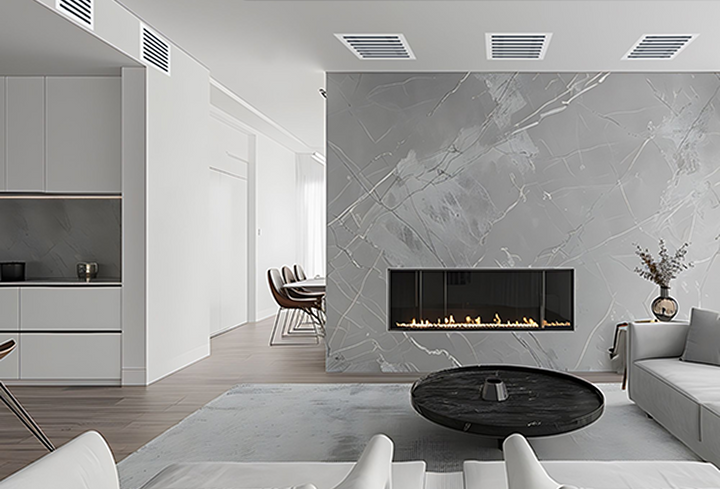
Living rooms and great roomsThis is where the upgrade reads loudest. Builder-grade ceilings often have one or two oversized return grilles dominating a sightline. A flush linear slot diffuser re-balances the entire ceiling plane in a five-minute swap.
02
KitchensKitchens are detail-dense: appliances, hardware, lighting, tile. A clean matte grille keeps the ceiling quiet so the rest of the room can speak.
03
Primary suitesThe bedroom you actually want to sleep in is one without visual noise. A vent cover with no visible screws, sitting flush against the ceiling, is one less thing for your eye to catch at 6 a.m.
04
Hallways and transitionsHallways are where finish cohesion matters most. They are long, they have multiple openings, and visual inconsistency reads as cheapness. A consistent grille across all of them quietly elevates the entire house.
05
Home offices and studiesWhere whisper-quiet airflow actually matters. The narrower slot profile of a linear diffuser distributes air more evenly than a stamped four-corner louver: less whoosh every time the system kicks on.
06
Light commercial spacesBoutiques, salons, restaurants, offices. Anywhere the ceiling is part of the brand. A consistent specification across every opening reads as care.
The full range, by the numbers
Three profiles, linear, standard and square, across 20 sizes. All matte white aluminum, priced per grille. Sizes are listed by duct opening; the faceplate is about two inches larger in each direction. Click any size to shop it.
| Profile | Duct opening | Face (approx.) | Price | Shop |
|---|---|---|---|---|
| Linear | 10" x 4" | 12x6 | $40.90 | Shop 10" x 4" |
| Linear | 12" x 4" | 14x6 | $40.90 | Shop 12" x 4" |
| Linear | 14" x 4" | 16x6 | $45.90 | Shop 14" x 4" |
| Linear | 16" x 4" | 18x6 | $50.90 | Shop 16" x 4" |
| Linear | 20" x 6" | 22x8 | $65.90 | Shop 20" x 6" |
| Linear | 30" x 6" | 32x8 | $95.90 | Shop 30" x 6" |
| Standard | 8" x 4" | 10x6 | $35.90 | Shop 8" x 4" |
| Standard | 8" x 6" | 10x8 | $40.90 | Shop 8" x 6" |
| Standard | 10" x 6" | 12x8 | $45.90 | Shop 10" x 6" (check stock) |
| Standard | 10" x 8" | 12x10 | $55.90 | Shop 10" x 8" |
| Standard | 12" x 6" | 14x8 | $45.90 | Shop 12" x 6" |
| Standard | 12" x 8" | 14x10 | $60.90 | Shop 12" x 8" |
| Standard | 14" x 6" | 16x8 | $50.90 | Shop 14" x 6" |
| Standard | 14" x 8" | 16x10 | $65.90 | Shop 14" x 8" |
| Standard | 16" x 6" | 18x8 | $65.90 | Shop 16" x 6" |
| Square | 6" x 6" | 8x8 | $35.90 | Shop 6" x 6" |
| Square | 8" x 8" | 10x10 | $45.90 | Shop 8" x 8" |
| Square | 10" x 10" | 12x12 | $65.90 | Shop 10" x 10" |
| Square | 12" x 12" | 14x14 | $70.90 | Shop 12" x 12" |
| Square | 14" x 14" | 16x16 | $95.90 | Shop 14" x 14" |
Looking for one size, like 4x10 or 12x12? See the vent cover size chart, with every size listed both ways.
OKUN vs the alternatives
How architectural-grade aluminum grilles compare against builder-grade plastic registers and custom commercial specifications.
| Attribute | Builder-grade | OKUN architectural | Custom commercial |
|---|---|---|---|
| Material | Plastic / thin steel | Commercial-grade aluminum | Aluminum or steel |
| Mounting | Visible screws | Concealed, hidden | Concealed, custom |
| Finish durability | Yellows over time | Fade-resistant powder coat | Fade-resistant powder coat |
| Profile | Stamped louvers | Linear slot / square / rectangular | Custom geometry |
| Lead time | In stock | In stock, 20 sizes | 4–8 weeks typical |
| Price per opening | $5–$15 | $36–$96 | $150–$400+ |
| Installation | DIY, 5 min | DIY, 15 min, screwdriver only | Specialty install often required |
The whole-house upgrade
Every vent in the house, in one afternoon.
At OKUN's prices, replacing every vent in a typical home runs about $500 to $1,200 in materials. Measure the openings, pick your sizes, and swap them with a screwdriver.

Installation: the honest version
Most home upgrades sound easier in marketing copy than they are at 2 p.m. on a Saturday. Here is the actual reality.
- Measure. Measure the existing duct opening (the rough cutout in the wall or ceiling), not the old vent cover. OKUN sizes are listed by duct opening; the faceplate is approximately two inches larger in each dimension to cover the rough cut.
- Match. Match your measurement to the OKUN size that fits. A 12x6 duct opening uses a 12x6 OKUN grille, with a faceplate of approximately 14x8 covering the surround.
- Remove. Unscrew and remove the existing vent cover. Set it aside.
- Mount. Set the OKUN grille over the duct opening. Drive the included screws into the existing mounting holes, or fresh ones if the original vent was undersized. Snap the cover face into place. The fasteners disappear.
Total time per grille: under 15 minutes. Tools required: a screwdriver. No drilling into joists, no patching drywall, no calling an HVAC tech. If you can change a switch plate, you can install one of these. For linear grilles, see the full guide to installing linear HVAC diffusers.
A note on scale
The argument for architectural grilles is not really about a single vent. It is about the fifteen of them spread through a typical home, every one of which is currently a stamped plastic disagreement with the rest of the interior.
At OKUN's price range, replacing the entire house runs roughly $500 to $1,200 in materials, depending on size mix. That is less than a single weekend of contractor labor on most jobs, and it pays back every time you walk into the room.
It is the architectural equivalent of finally getting a proper haircut: you do not notice it is missing until it is there.


Finish the room
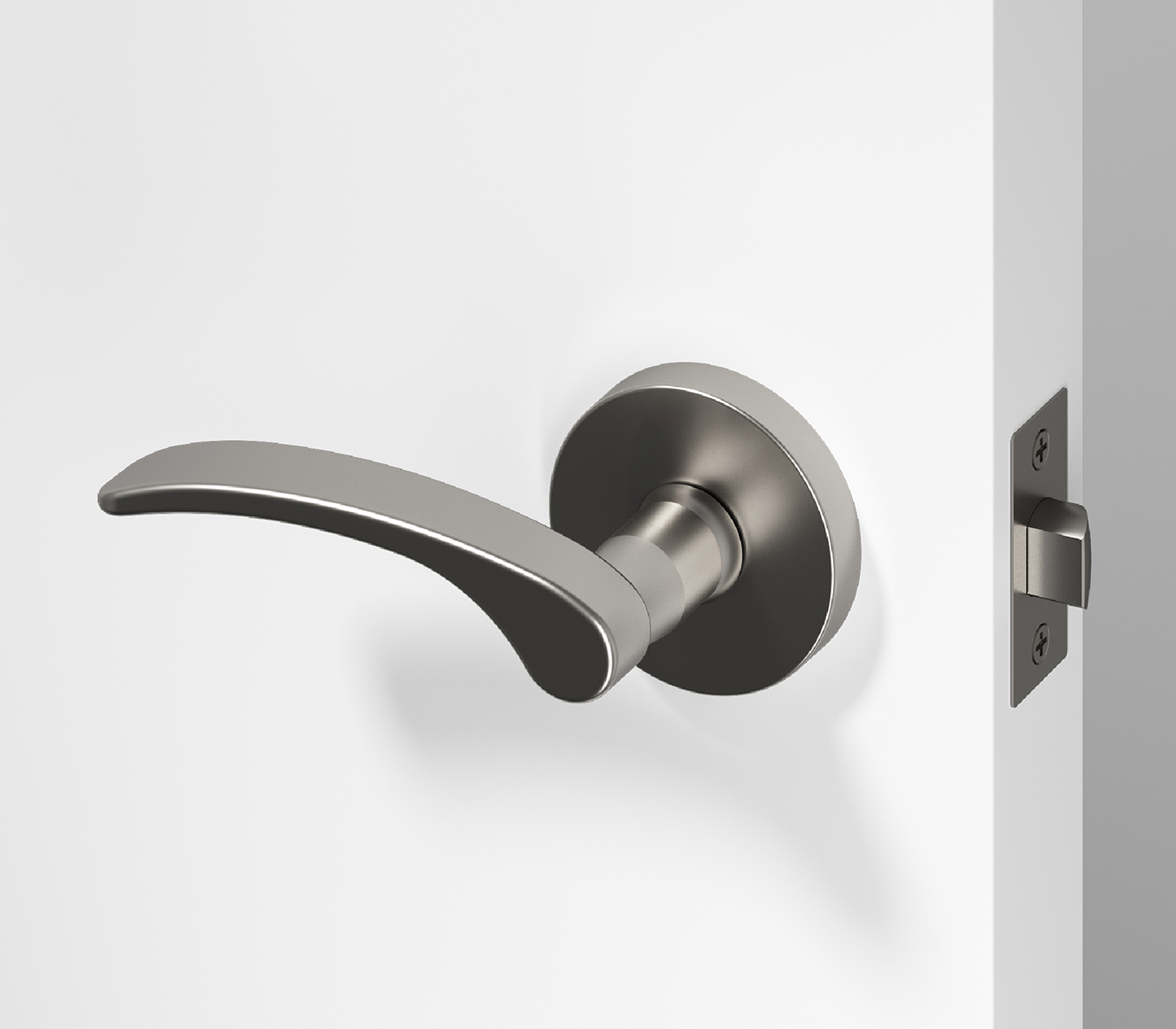
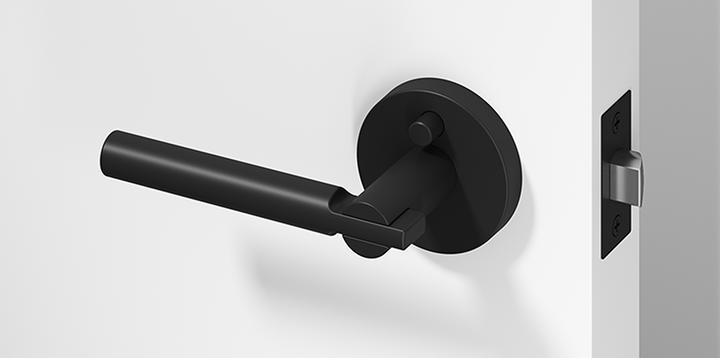
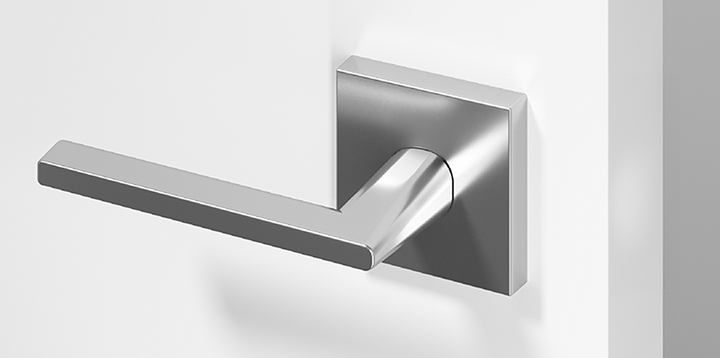
Match your grilles to your door hardware
A square grille with a square-rose lever. A linear grille with a long, slim lever. One design language, from the ceiling to the door.
Questions, answered directly
What is an architectural grille?
An architectural grille is a vent cover engineered as a design element rather than a stamped utility part. It is typically made from powder-coated aluminum, uses a concealed (hidden-screw) mounting system, sits flush with the surrounding surface, and is offered in linear slot, square, or standard rectangular profiles. Unlike builder-grade plastic registers, architectural grilles are intended to integrate seamlessly into ceilings and walls as part of the room's finish.
What is a linear slot diffuser, and how is it different from a standard vent?
A linear slot diffuser uses long, narrow horizontal slots to distribute air evenly along its length, producing a quieter, more uniform airflow pattern and a minimalist visual profile. A standard vent cover typically uses larger stamped louvers with visible screws and a more utilitarian look. Linear slot diffusers are preferred in modern interiors because they read as a clean line in the ceiling or wall rather than a piece of HVAC equipment.
Are OKUN grilles made of metal or plastic?
OKUN grilles are made entirely from commercial-grade aluminum with a matte white powder-coated finish. They contain no plastic. Aluminum makes them rust-resistant, dimensionally stable, fade-resistant, and substantially heavier in the hand than injection-molded plastic registers.
Can OKUN grilles be installed on walls, ceilings, and floors?
OKUN grilles are designed for wall and ceiling installation. They are not recommended for floor use, where vent covers must withstand foot traffic and require a structural floor register specification.
Do OKUN grilles work for both supply and return air?
Yes. OKUN grilles are dual-function and work for both supply (air being delivered into the room) and return (air being pulled back into the HVAC system) applications. The same grille style can be specified across every opening in a home, creating consistent visual language.
What sizes do OKUN architectural grilles come in?
OKUN offers 20 standard sizes across three profiles: Linear (4-inch and 6-inch height profiles, up to 30 inches long), Standard rectangular (proportions like 12×6, 14×8, 16×6), and Square (6×6, 8×8, 10×10, 12×12, 14×14). Sizes are quoted by duct opening; the faceplate is approximately two inches larger in each dimension.
How much do architectural grilles cost?
OKUN architectural grilles range from $35.90 for a 6×6 square grille to $95.90 for a 30×6 linear grille or a 14×14 square. Comparable commercial architectural grilles from custom manufacturers typically run $150 to $400 per opening — making OKUN roughly 60 to 80 percent less expensive while using the same materials class.
How are architectural grilles installed?
Installation takes under fifteen minutes per grille and requires only a screwdriver. The steps: measure the duct opening, remove the old vent, set the new OKUN grille over the opening, drive the included screws into the existing or fresh mounting holes, and snap the cover face into place to conceal the fasteners.
Can airflow be adjusted on OKUN grilles?
Yes. OKUN grilles feature manually adjustable horizontal blades that can be positioned with any household tool to direct airflow, throttle volume, or fully close the vent. No specialty hardware or HVAC technician is required.
Will the matte white finish yellow or fade over time?
No. OKUN uses a powder-coated matte white finish on aluminum, which is fade-resistant and does not yellow with age or UV exposure. This is a primary durability advantage over injection-molded plastic registers, which commonly yellow within a few seasons.
Are OKUN grilles a good fit for new construction or renovation?
Both. The standardized size offering and concealed mounting make OKUN grilles drop-in replacements for renovation, and the consistent aesthetic across linear, square, and rectangular profiles makes them an efficient single-source specification for new construction. Builders, architects, and interior designers use them across full project specifications.
Where is OKUN based, and where do they ship?
OKUN is a New York City–based architectural hardware brand founded on the premise of making high-end design products attainable. OKUN ships across the United States via okunusa.com and Amazon.
Shop vent covers by shape
Every OKUN grille is matte white aluminum with hidden screws. Pick a shape, or match your doors:
By shape
 Linear vent coversLong, narrow slots6 sizes
 Standard vent coversClassic rectangles9 sizes
 Square vent coversCeilings and returns5 sizes
Finish the room
 Matching door handles
 Square-rose door handles
Architectural Grilles
The wall was waiting.
Explore the full OKUN architectural grille collection: 20 sizes, matte white aluminum, in stock now.
More Vent Cover Guides
OkunThe little details make a big difference. Designed in NYC.


