

Design Reference · Interior Hardware
The Dummy Door Knob: The Handle That Does Nothing, Beautifully.
A complete reference for homeowners, designers, and renovators specifying decorative hardware — what a dummy handle is, where it belongs, and how to choose one that never looks like an afterthought.
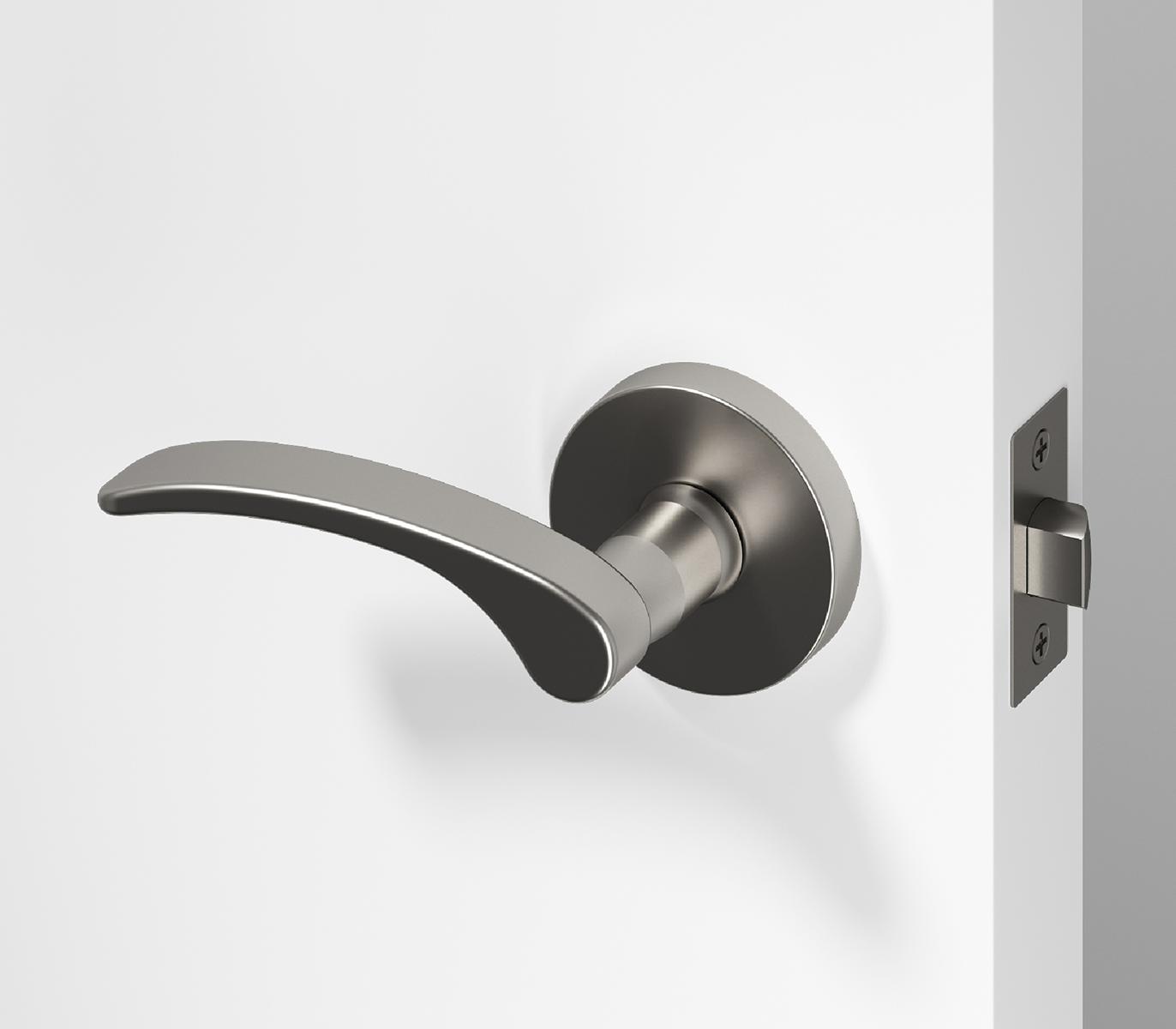
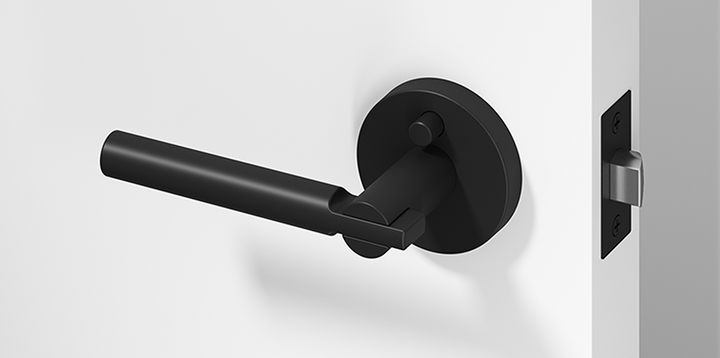
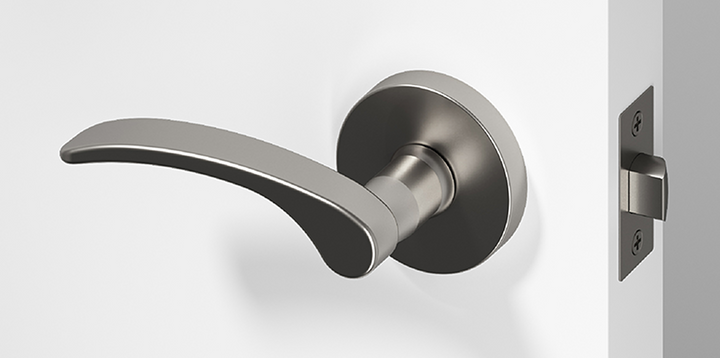
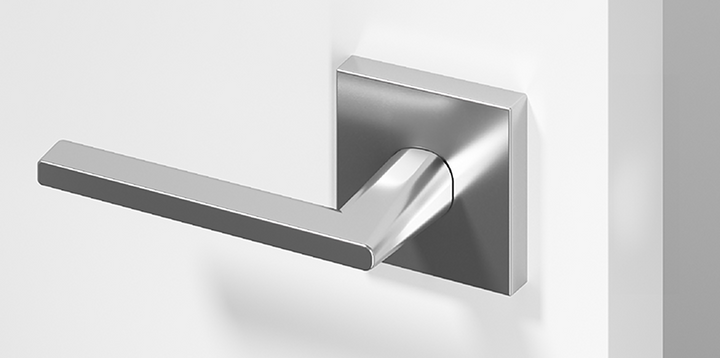
OKUN Dummy Lever · Concealed-Mount Rosette · Four Finishes
In one paragraph
A dummy door knob — also called a dummy handle or dummy lever — is a decorative, non-turning piece of hardware that mounts to the surface of a door with no working latch or lock. It exists to be gripped, pulled, and looked at, not turned. OKUN dummy handles are surface-mounted with a concealed-mount rosette — no visible screws on the finished face — in four finishes (matte black, brushed nickel, chrome, and champagne brushed gold) across the same collections as the passage and privacy lines. Designed in New York City, from $29.99 per handle.
The door that does nothing — and needs a handle anyway.
There's a quiet test every well-designed home passes: every door looks like it belongs, even the ones that don't really do anything.
The closet that swings open on a magnet. The pantry that clicks shut on a ball catch. The second panel of a set of French doors that mostly just stands there, looking handsome. Those doors still need a handle — they just don't need one that works in the mechanical sense. That handle is the dummy.
The word undersells it. A dummy lever is engineered to look identical to its working siblings, but the internals are deliberately simple: a static lever fixed to a backplate, surface-mounted to the door face. No spindle. No spring. No latch tongue disappearing into the frame. That simplicity is the entire point — it's built for doors that close some other way, where a latch would be redundant or in the way.
What it doesn't do is lock, latch, or turn. Need privacy for a bedroom or bath? That's a privacy handle. Need a door that latches but never locks, like a hallway? That's a passage handle. Reach for a dummy only when the door needs a handle and nothing more.
Dummy Handle (n.)
A decorative, non-turning lever or knob mounted to the surface of a door, with no latch or lock mechanism. Used as a pull and a visual element on doors that close by other means — magnetic, ball, or roller catches, or flush bolts. The static counterpart to passage and privacy hardware.
Where dummy handles belong.
The best argument for dummy hardware is symmetry. Hardware is one of the few details the eye reads instantly across a whole room — and a missing or mismatched handle is the kind of thing you can't unsee once you've noticed it.
Closets & wardrobes
Doors that swing freely or ride on a magnetic catch. A dummy lever gives you a clean grip with no mechanism to fail.
Pantries & panel doors
Anything that clicks shut without a latch. The handle is there to pull and to match — nothing more is required.
French & double doors
The inactive panel needs a handle that visually matches the active one but doesn't operate. The dummy keeps the pair symmetrical.
Bi-folds & decorative doors
Where you want a grip and a finished look without boring out the door for a full latch assembly.
The rule of thumb: if the door already closes on its own and only needs something to pull, a dummy handle is the correct — and quietest — choice.
Reference — Side by Side
Dummy vs. passage vs. privacy.
| Function | What it does | Where it goes |
|---|---|---|
| Passage | Latches, never locks | Hallways, living rooms, open closets |
| Privacy | Latches + push-button lock with emergency release | Bedrooms, bathrooms |
| Dummy | No latch, no lock — static and decorative | Closets, pantries, French / double doors, bi-folds |
What separates a designer dummy from a builder-grade one.
Most decorative levers quietly give themselves away in one place: the screws. On builder-grade dummy hardware, the mounting screws sit right out on the backplate, plainly visible on the finished face of the door. It's a small thing that reads as cheap from three feet away.
OKUN dummy handles use a concealed-mount rosette — the screws hide behind the backplate, so the face you actually see is uninterrupted. It's the same instinct behind every well-detailed object: hide the fasteners, show the form. Pair that with a properly proportioned lever — a 45-degree projection, a 2 5/8" rosette, a lever length tuned to the collection — and the handle reads as part of the architecture rather than an afterthought screwed onto it.
Hide the fasteners, show the form. A dummy handle is the piece nobody notices when it's done right — and everybody notices when it's missing.
Reference — By the Numbers
The OKUN dummy, specified.
Choosing a finish.
Finish is where a dummy handle stops being hardware and starts being design. The move that makes a home feel custom: pick one finish and carry it across every door — passage, privacy, and dummy.
Installing a dummy handle (the easy one).
Of the three functions, the dummy is the simplest install. There's no latch to seat and no bore to align with a strike — the handle surface-mounts to the door face. A screwdriver, a few minutes, and the included hardware are all it takes, and the lever is reversible for left- or right-hand doors.
Two things to confirm before you order: that your door closes on a catch — magnetic, ball, or roller — or on flush bolts rather than relying on the handle to latch; and, for double doors, that you're matching the dummy to the active handle's collection and finish so the pair reads as one set.
Reference — Frequently Asked
Questions, answered directly.
Is a dummy door knob the same as a dummy door handle or lever?
Yes. "Dummy knob," "dummy handle," and "dummy lever" all describe the same thing — a decorative, non-turning piece that mounts to the door surface with no working latch. The terms are used interchangeably; OKUN's are levers.
Does a dummy handle lock?
No. A dummy handle neither locks nor latches. For a locking door (bedroom, bathroom), choose a privacy handle. For a latching, non-locking door, choose a passage handle.
Where should I use a dummy handle?
On doors that close without a latch — closets, pantries, bi-folds, decorative panels, and the inactive side of French or double doors that ride on a magnetic, ball, or roller catch.
Do I need one dummy handle or two for a double door?
Typically one dummy per inactive panel, matched to the active panel's handle so the pair looks identical. Some setups use a dummy on each side; specify by how your doors close.
Are dummy handles hard to install?
They're the easiest of the three functions. The handle surface-mounts to the door with a screwdriver and the included hardware — no latch bore required — and installs in minutes.
What finishes do OKUN dummy handles come in?
Four: matte black, brushed nickel, chrome, and champagne brushed gold — the same finish range as OKUN's passage and privacy levers, so you can match hardware across the whole home.
Every door was waiting.
Explore the full OKUN dummy collection — concealed-mount, four finishes, from $29.99. Designed in NYC, in stock now.
Shop Dummy Handles →