

Hardware Guides
Dummy Door Knob Guide: What It Is, When to Use One, and How to Pick the Right Style
If you've been shopping for door hardware and hit the term dummy door knob, you probably paused. It sounds like an insult or a prank. It's neither — and once you understand what a dummy door knob actually does, you'll realize you've walked past dozens of them without noticing. That's sort of the point.
This guide breaks down exactly what a dummy door knob is, where it belongs in your home, and how to choose one that looks intentional instead of builder-grade. At OKUN, the whole idea is that the little details make a big difference — and few details are quieter, or more telling, than the handle on your door.
What Is a Dummy Door Knob?
A dummy door knob is a fixed handle that doesn't turn, latch, or lock. It's mounted to the door purely as something to grab or pull. There's no working mechanism inside — just the styled handle.
"Dummy" refers to the missing latch, not the quality. Think of it the way film crews use a "dummy" camera: it looks completely real and does none of the working. A dummy door knob delivers the full visual of a real handle without the moving parts.
That distinction matters, because a dummy door knob solves a problem a working handle can't: it gives you a beautiful, grabbable handle on a door that doesn't need to latch.
When Do You Need a Dummy Door Knob?
More often than most people expect. A dummy door knob is the right choice for:
- Double doors and French doors — the stationary side only needs a pull, so a dummy door knob mirrors the working side for perfect symmetry.
- Closet, pantry, and bi-fold doors — doors that open with a tug rather than a turn.
- Decorative or non-functional doors — where you want a clean, finished handle without any mechanism behind it.
Here's the classic setup people get wrong: on a set of double doors, you install a working handle on the active side and a matching dummy door knob on the fixed side. Same finish, same profile — one opens, one simply holds the look. Symmetry achieved, function intact.
Nobody should be able to tell which side opens — until they try.
Dummy Door Knob vs. Passage and Privacy Handles
A quick comparison so you order the right thing the first time:
- Passage handle — turns and opens a latch, no lock. For hallways, closets, and everyday doors.
- Privacy handle — turns and opens, with a push-button lock. For bedrooms and bathrooms.
- Dummy door knob — does not turn at all. Fixed, decorative, no latch. For fixed double-door sides, closets, and bi-folds.
If the door needs to physically latch shut, you want passage or privacy. If it just needs a handle to grab or pull, a dummy door knob is exactly right.
How to Choose a Dummy Door Knob That Doesn't Look Cheap
Most homes come fitted with the cheapest hardware that technically functions — shiny brass knobs that scream 1998, finishes that wear off in a year. A bad handle is the home-improvement equivalent of a great outfit ruined by scuffed shoes.
A dummy door knob worth installing should hit a few marks:
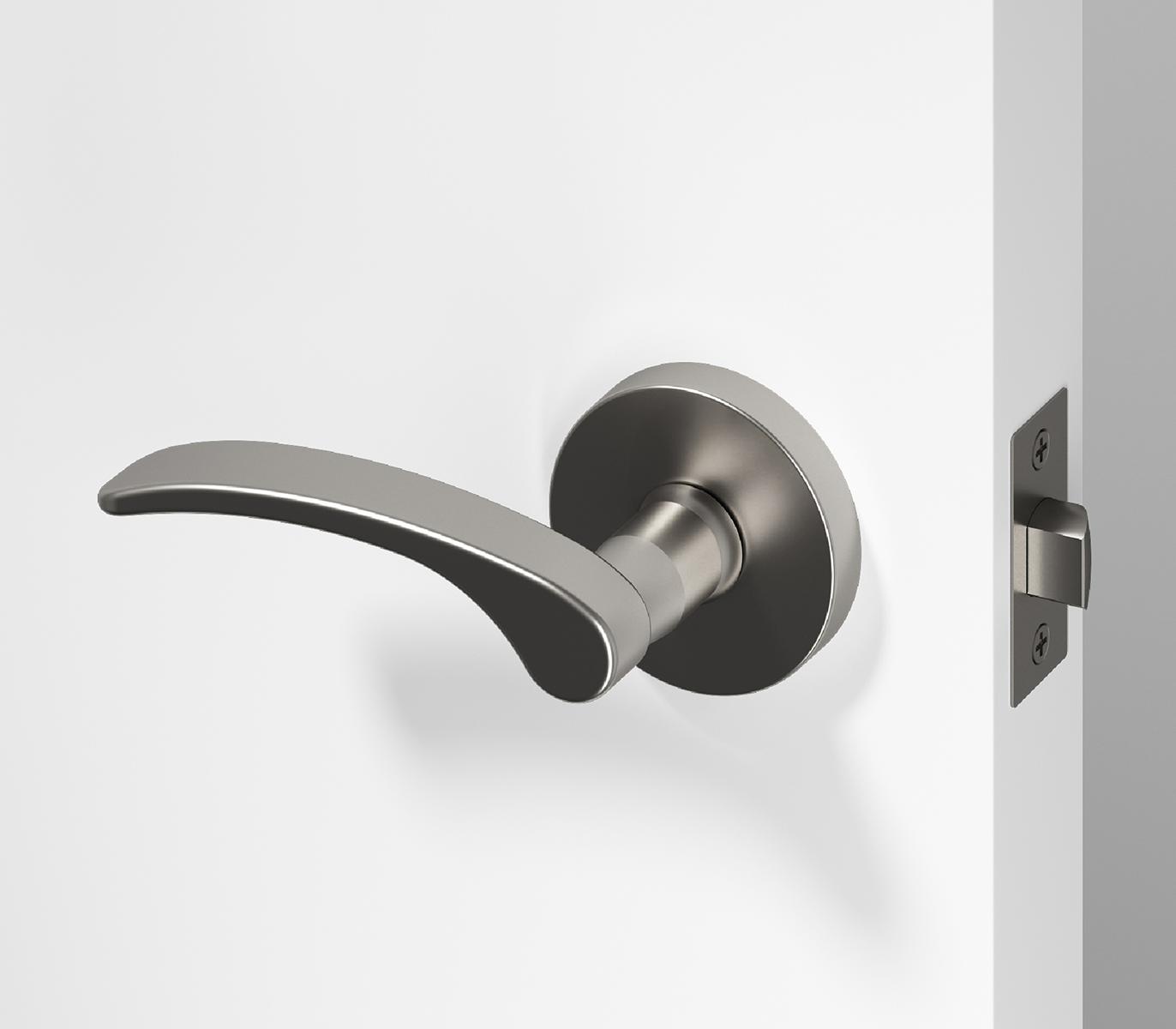
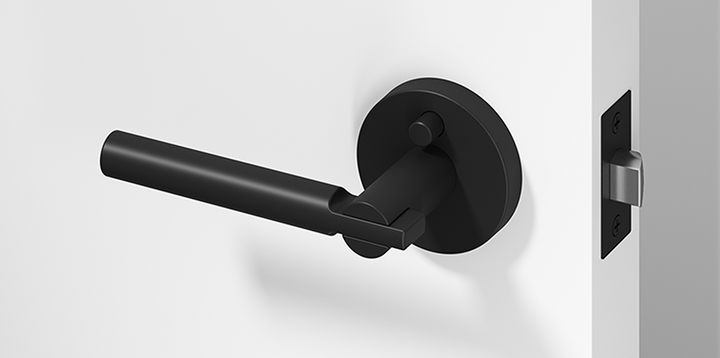
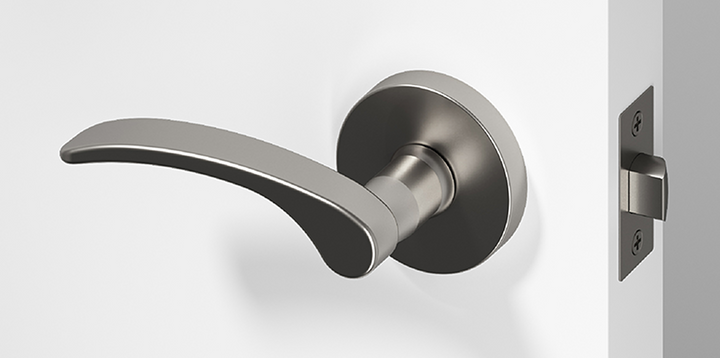
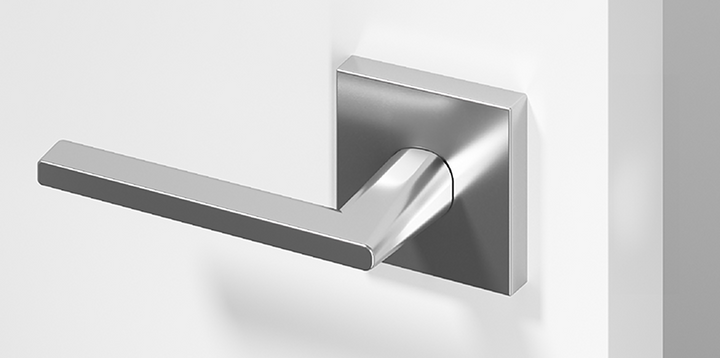
- A modern, minimalist profile. Clean lines and a deliberate shape that reads as designed, not default. OKUN collections like the slim rectangular Valli, the tapered Zen, the curved Arc, and the elongated, architectural Halo are built to disappear into good design rather than fight it.
- A finish that matches the rest of your hardware. OKUN offers bold matte black, warm brushed nickel, and bright chrome across the full lineup — so your dummy door knob matches the working handle on the other side of the same double door exactly.
- A flush, quiet rosette. A 2 5/8" circular backplate that sits clean against the door, no bulk.
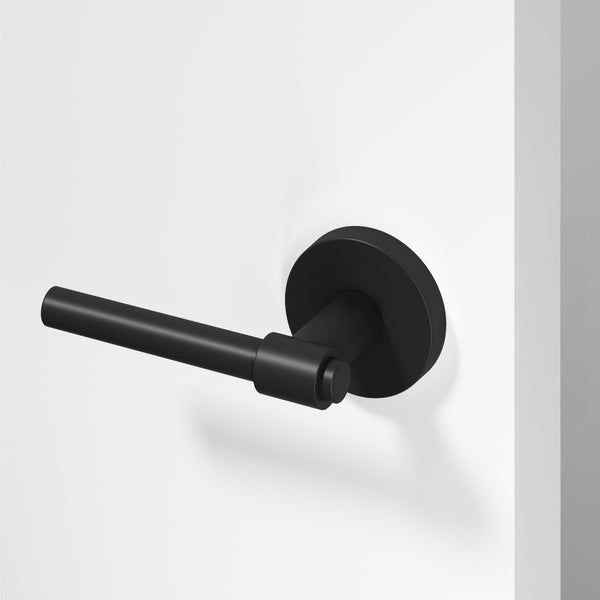
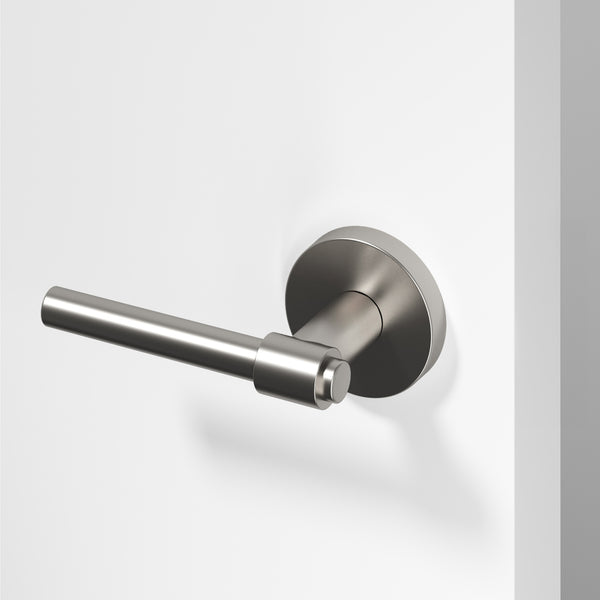
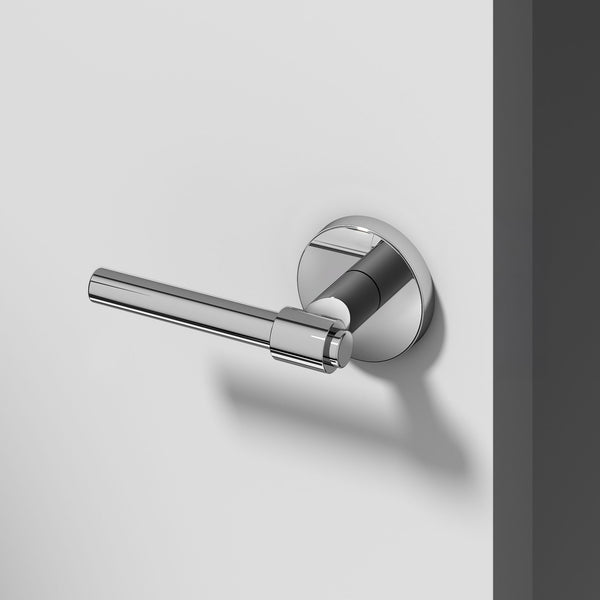
The Zen dummy door knob in all three OKUN finishes. Images: okunusa.com
The goal is for the dummy door knob to look identical to its working twin. Nobody should be able to tell which side opens — until they try.
Installing a Dummy Door Knob
This is the easy part. A dummy door knob is simpler to install than a working handle because there's no latch to align. Every OKUN handle ships as a complete package — handle, mounting screws, Allen wrench, and the hardware you need — and goes in with a screwdriver in about fifteen minutes. Reversible for left- or right-hand doors, and sized for standard door thicknesses.
No special tools, no second trip to the store, no existential crisis. Just a finished-looking door.
The Small Decision That Adds Up
A dummy door knob seems like a tiny thing. But a whole house of tiny things — working handles and dummy door knobs alike, all finished in the same considered tone — is the difference between a home that's decorated and one that feels truly designed.
So the next time you're staring at a set of French doors wondering why the fixed side looks a little off, you'll know: it's missing its dummy door knob. Easy fix, big difference.
Designer hardware, honest prices.
Find the dummy door knob that completes the look — in matte black, brushed nickel, or chrome.