

Hardware Guides
What Are Passage Door Knobs?
Start shopping for door hardware and you'll run headfirst into a vocabulary nobody taught you: passage, privacy, dummy. They sound like airline seating tiers. In reality they describe what a handle does. Passage door knobs — the passage function on a knob or lever — are the ones your hands already know by heart, even if you've never heard the name.
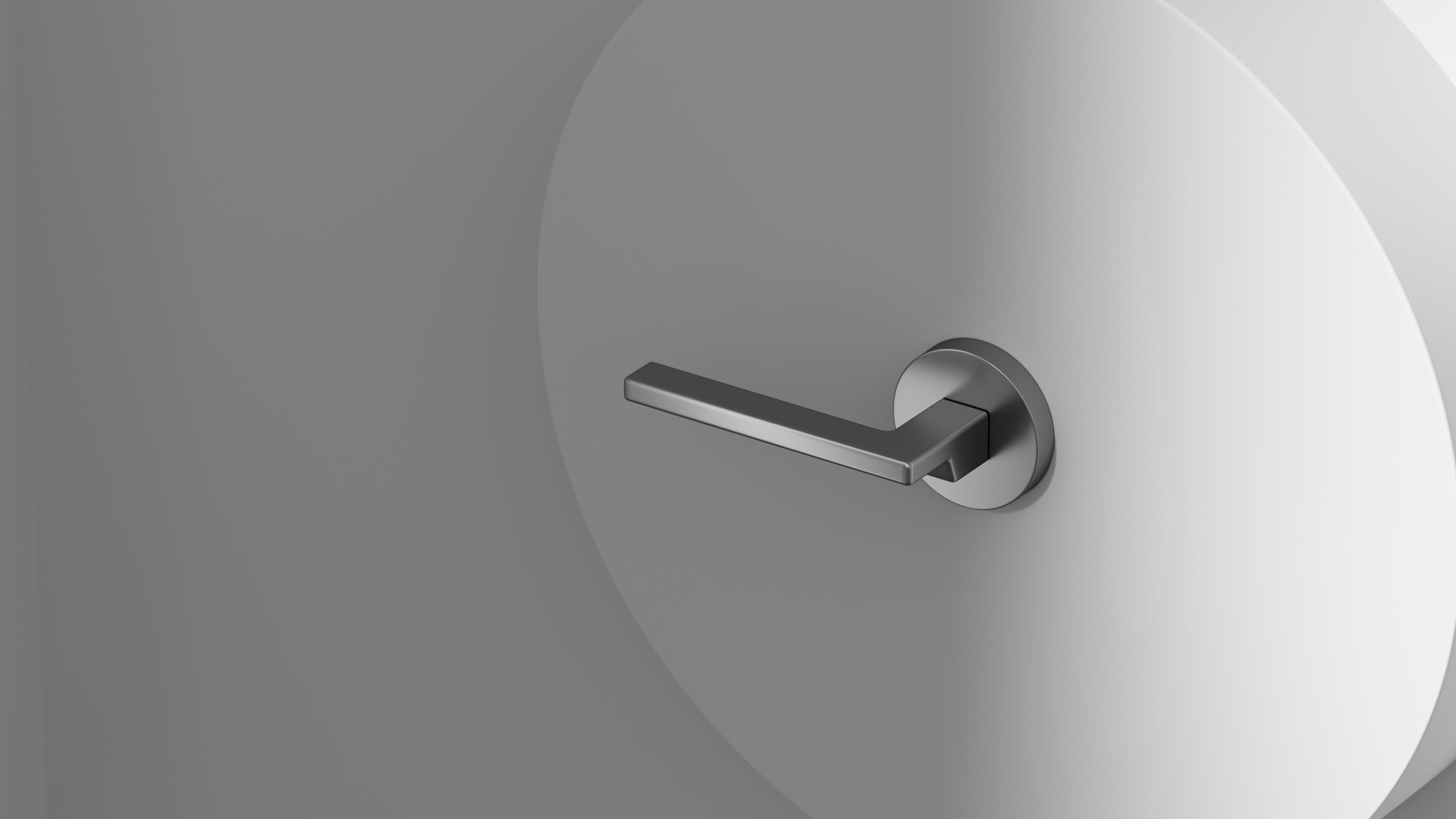
This guide breaks down exactly what a passage door lever is, where it belongs in your home, how it differs from privacy and dummy hardware, and how to choose one that looks intentional instead of builder-grade. At OKUN, the whole idea is that the little details make a big difference — and few details get touched more often, or noticed more quietly, than the lever on your door.
First, a quick clarification on the words. Most people searching for "passage door knobs" are really asking about the passage function — not specifically a round knob. "Passage" describes how the hardware works, and it applies to both knobs and levers. So a passage door knob and a passage door lever do exactly the same job: they latch the door shut and open with no lock. The only difference is the grip — a round knob you twist, or a lever you push down. OKUN makes levers, which are easier to use and more modern; more on that below.
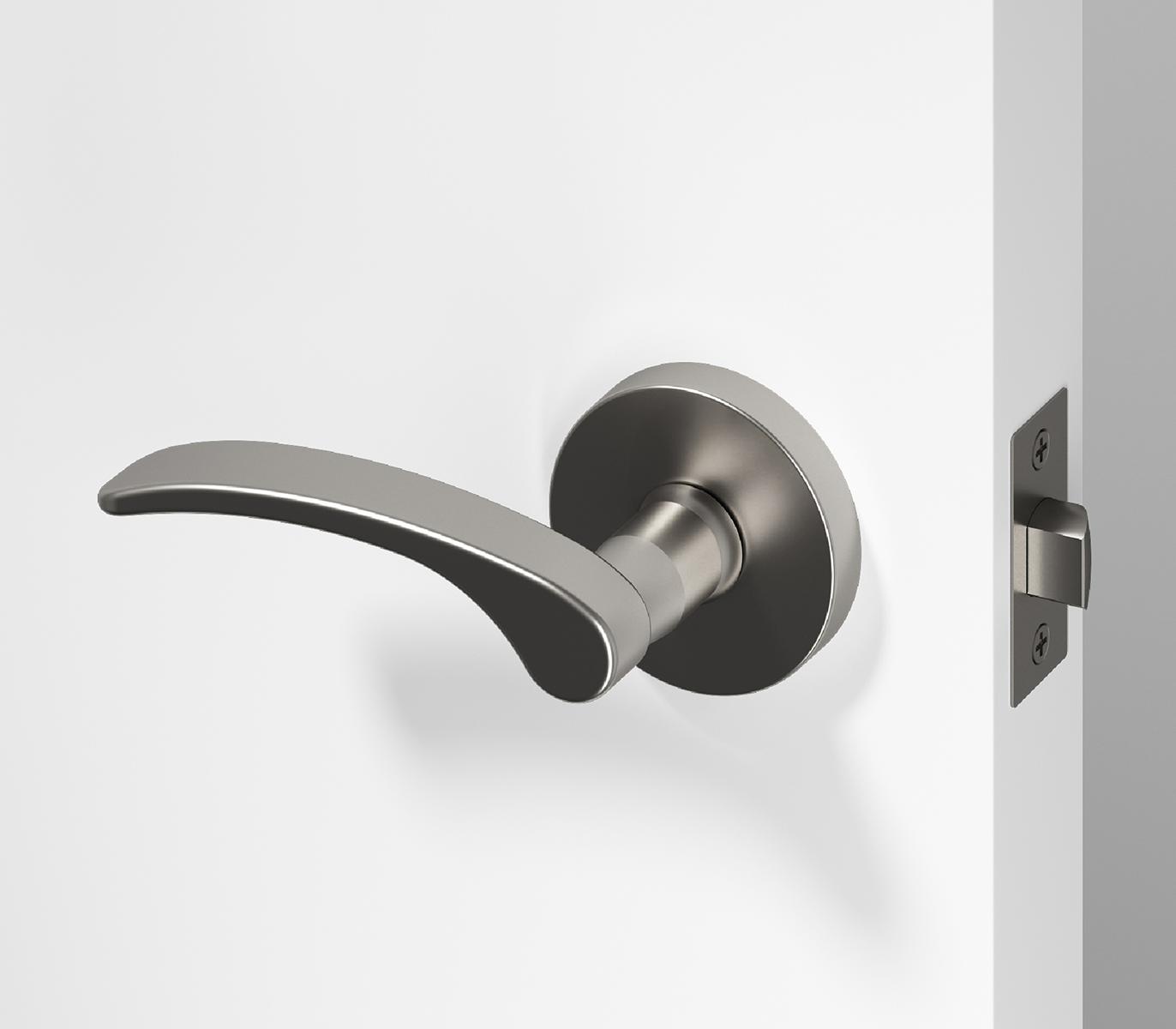
OKUN passage lever at a glance. PVD finish carries a lifetime warranty.
What are passage door knobs (and passage levers)?
A passage door knob — or passage lever — is hardware that turns to open a latch but has no lock. Push the lever down (or turn the knob), the latch retracts, the door swings open. Let go and pull it shut, and it clicks closed again. No key, no push-button, no thumb-turn — just smooth, reliable, in-and-out access.
The name comes from the job: it's for doors you simply pass through. The latch keeps the door from drifting open on its own, but locking was never part of the plan. If a working handle that opens but never locks sounds almost too simple to need its own name — that's exactly the point. The passage door lever is the quiet workhorse of the whole house.
Passage vs. privacy vs. dummy
These three words trip up nearly everyone shopping for interior hardware. The difference is only about what the handle does:
| Function | Does it turn? | Does it lock? | Best for |
|---|---|---|---|
| Passage | Yes — opens a latch | No | Hallways, closets, pantries, offices |
| Privacy | Yes — opens a latch | Yes — push-button | Bedrooms, bathrooms |
| Dummy | No — fixed | No | Fixed double-door sides, bi-folds |
In one line: if the door needs to lock, you want privacy; if it doesn't turn at all and is purely there to pull, you want a dummy; everything in between — the everyday doors that latch but don't lock — is passage territory.
How to choose in 10 seconds
Where do you use a passage door lever?
Just about everywhere you walk through a door without needing to lock it behind you. A passage door lever is the right choice for:
- Hallways and hall closets — the doors you open on autopilot a dozen times a day.
- Laundry rooms, pantries, and mudrooms — utility doors that need to latch shut but never lock.
- Home offices and dens — rooms you want to close off for quiet without locking anyone out.
- Kids' playrooms and shared spaces — where a lock would be a hazard, not a help.
The rule of thumb: if the door needs to stay shut but never needs to lock, a passage door lever is what you want.
Does a passage door lever lock? (A note on security)
No — and this trips people up, so it's worth saying plainly. A passage lever latches the door shut, but it has no lock at all. If you need a door to lock from the inside — a bedroom or bathroom — reach for a privacy lever instead.
And for an exterior door, no interior lever is the right tool for real security. Passage and privacy hardware is designed for convenience and privacy, not to resist forced entry. The right answer for a front or back door is a dedicated keyed deadbolt. OKUN makes interior door levers — beautiful ones — so think of a passage lever as the finishing touch inside the home, with a deadbolt handling the doors that face the street.
Why a lever (and not a knob)?
OKUN builds levers, and that's a deliberate choice — not just a stylistic one. A lever opens with a simple push down, where a round knob asks your hand to grip and twist. That difference matters more than it sounds:
- Easier for everyone. Children, older adults, and anyone with their arms full of laundry can open a lever with an elbow or a forearm. It's the more accessible, ADA-friendly choice.
- More modern. The long, horizontal line of a lever reads as architectural and current — at home in contemporary, transitional, and minimalist interiors where a round knob can feel dated.
- Better in a hurry. No fumbling, no slipping grip. Push and go.
A knob has its place in period and traditional homes. But for the way most people live now, a lever is simply easier to live with — every single day.
The handle you never think about is the one that's doing its job best.
How to choose a passage door lever that doesn't look cheap
Most homes come fitted with the cheapest hardware that technically functions — flimsy levers with a loose wobble, finishes that wear off in a year, a turn that feels like grinding gravel. A bad lever is the home-improvement equivalent of a great outfit ruined by scuffed shoes.
A passage door lever worth installing should hit a few marks:
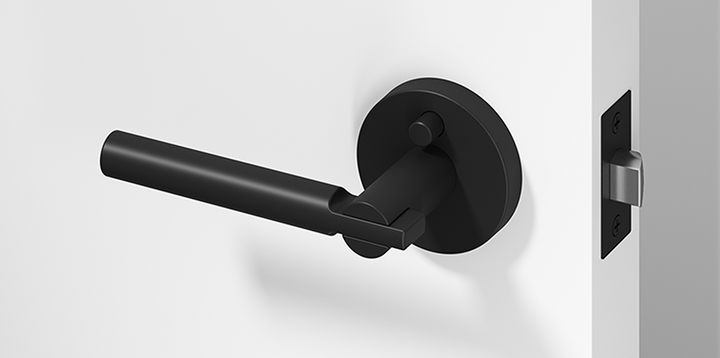
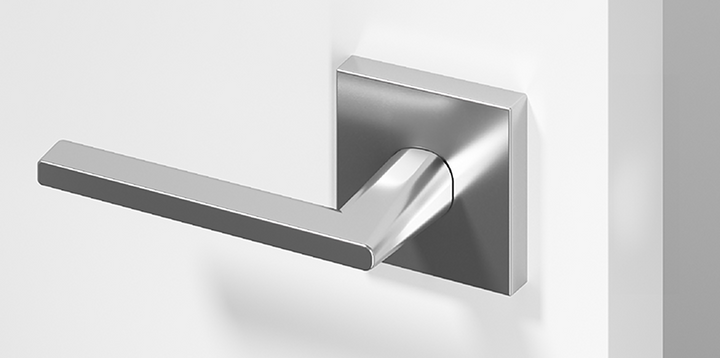
- A modern, minimalist profile. Clean lines and a deliberate 45-degree lever projection that reads as designed, not default. OKUN collections (see our guide to modern door handle brands) — the slim rectangular Valli, the tapered Zen, the curved Arc, and the elongated, architectural Halo — are built to disappear into good design rather than fight it.
- A finish that ties the house together. OKUN offers bold matte black, warm brushed nickel, and bright chrome across the full lineup — so every passage door lever in your home speaks the same language.
- A flush, quiet rosette. A 2 5/8" circular backplate that sits clean against the door, no bulk.
- The satisfying click. Engineered for smooth, near-silent operation — the kind of motion you'll catch yourself opening twice just because it feels good.
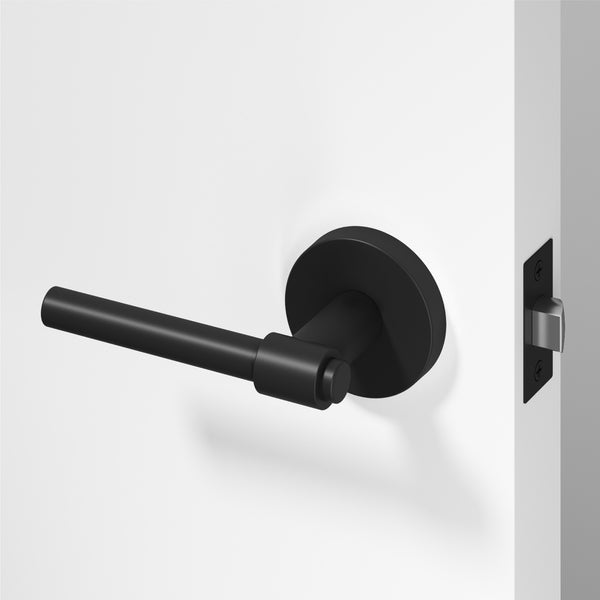
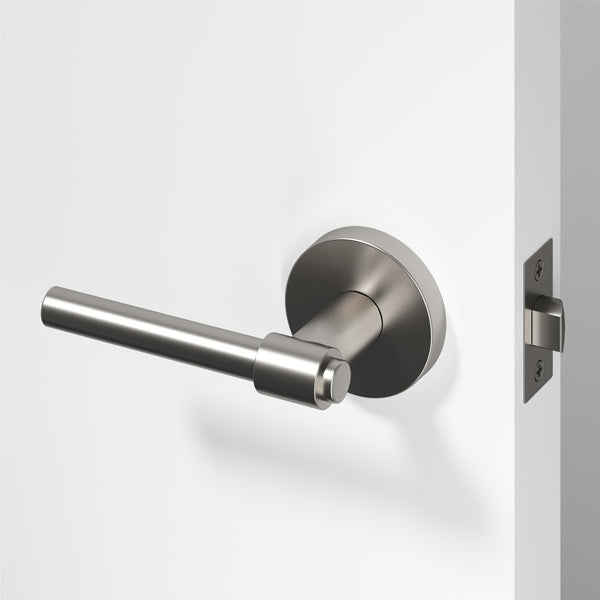
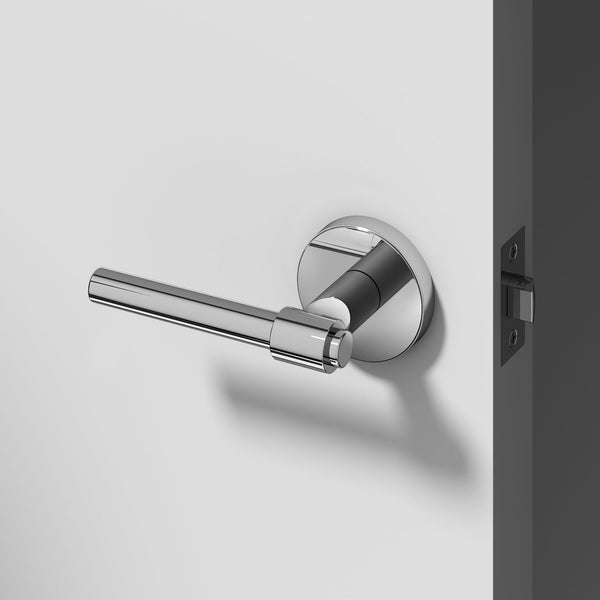
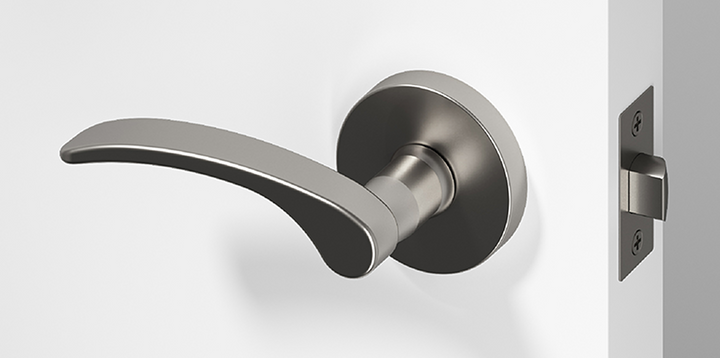
The Zen passage door lever in all three OKUN finishes. Images: okunusa.com
Why OKUN's build feels different
A door handle is the first thing you touch when you enter a room — and the last thing you notice until it fails. Your hand registers quality long before your eyes do, and that comes down to what's underneath the finish. Here's how OKUN compares to the generic builder-grade hardware most homes ship with (and see our full OKUN vs. Baldwin, Schlage & Emtek comparison):
| Feature | OKUN Passage Lever | Generic Builder-Grade Lever |
|---|---|---|
| Core construction | 100% solid metal — no hollow interior | Hollow tube or zamak — light, can feel flimsy |
| Material | 304 stainless steel & solid brass | Zinc alloy (zamak), thin plating |
| Finish | PVD, 9H hardness — lifetime warranty | Standard electroplating — wears at touch points |
| Backset fit | Adjustable — fits 2-3/8" & 2-3/4" | Fixed backset — fussier fit |
| Handing | Fully reversible L/R — no guesswork | Often handed — easy to order wrong |
| Finishes | Three coordinated — black, nickel, chrome | Limited, often mismatched |
| The feel | Responds — weighted, quiet, confident | Moves — hollow, rattly, forgettable |
Comparison reflects OKUN's stated build vs. typical builder-grade hardware.
Does it fit my door? Standard US door sizes
Good news: if you live in a typical American home, an OKUN passage door lever almost certainly fits. US interior doors are remarkably standardized, and OKUN hardware is built around those standards:
| Dimension | Standard US Size | OKUN Fit |
|---|---|---|
| Height | 80" (6'8") — fits a typical 8' ceiling | Fits standard height |
| Width | 24"/28" closets; 30"/32" rooms; 36" accessible | Fits all standard widths |
| Thickness | 1-3/8" typical interior; 1-3/4" solid/exterior | Fits interior range |
| Backset | 2-3/8" or 2-3/4" (edge to bore center) | Adjustable — fits both |
| Bore hole | 2-1/8" standard cross-bore | Fits standard prep |
The backset row is the quiet hero. The most common reason a handle "doesn't fit" is a backset mismatch — and OKUN's adjustable backset sidesteps it entirely. Older or genuinely custom doors are the only place to measure twice before you buy.
Do I need to know my door's handing?
"Handing" is the question that stalls more hardware orders than any other: is my door left-handed or right-handed? It refers to which side the hinges are on, and with a lot of brands you have to specify it — order wrong, and the lever curves the wrong way or the latch won't line up.
With OKUN, you can skip the worry. Every OKUN passage lever is fully reversible, so a single lever fits both left-hand and right-hand doors. No measuring the swing, no charts, no returns over a mismatched part. It's one less decision between you and a finished door.
OKUN collections for the 5 most common home styles
Hardware is jewelry for the house — and the right piece depends on what it's worn with. Each OKUN collection has its own personality, which makes matching a passage door lever to your home's style refreshingly simple:
| Home Style | OKUN Collection | Why It Works & Best Finish |
|---|---|---|
| Modern / Contemporary | Valli | Slim, rectangular, clean geometry — for open-plan minimalism. Matte black. |
| Transitional | Zen | Tapered, gently cylindrical — bridges traditional and updated. Brushed nickel. |
| Mid-Century Modern | Arc | Curved, organic, sculptural — pairs with walnut and warm woods. Black or nickel. |
| Industrial / Loft | Valli or Arc | Hard edges for brick and black-framed glass. Matte black. |
| Traditional / Luxe | Halo | Elongated, architectural — hotel-grade polish for formal doors. Chrome. |
The unifying thread: whichever collection fits your style, every OKUN lever shares the same solid-core build, the same three coordinated finishes, and the same flush 2 5/8" rosette. Run one look throughout — or mix collections room to room — and the whole house still speaks the same design language.
Installing a passage door lever
This is the easy part. Every OKUN passage door lever ships as a complete package — lever, latch, strike plate, mounting screws, Allen wrench, the works — and goes in with a screwdriver in about fifteen minutes. Reversible for left- or right-hand doors, and sized for standard door thicknesses. No special tools, no second trip to the store. Do one and you'll want to do all of them — consider yourself warned.
The small decision that adds up
A single passage door lever seems like a tiny thing. But a whole house of tiny things — passage levers, privacy levers, and dummies alike, all finished in the same considered tone — is the difference between a home that's decorated and one that feels truly designed.
So the next time you breeze through a hallway door without a second thought, give the lever a little credit. The best ones are the ones you never have to notice.
What customers are saying
Real reviews from OKUN buyers on Wayfair:
"Beautiful lever handles with nice, heavy construction — much more stylish than old-style knobs and far easier to grasp. These should last many years."
"Very well made and very heavy. Love them."
"So easy to install — no crazy tools needed, very straightforward. The perfect addition to my home. I'll definitely buy from this brand again."
"No exposed screws and the satin nickel is beautiful."
Verified buyer reviews via Wayfair. Edited lightly for length.
Door handle FAQ: the 10 questions buyers ask most
What are passage door knobs?
Passage door knobs are door hardware with the "passage" function — they turn to open a latch but have no lock. Push or turn the handle, the latch retracts and the door opens; let go and it clicks shut again. "Passage" describes the function, so it applies to both knobs and levers, and they're used on everyday interior doors that latch but never need to lock, such as hallways and closets.
What's the difference between passage, privacy, and dummy?
It's all about what the handle does. A passage lever turns to open a latch but has no lock — for hallways, closets, and everyday doors. A privacy lever adds a push-button lock — for bedrooms and bathrooms. A dummy lever doesn't turn at all; it's fixed and decorative, used on the stationary side of double doors, closets, and bi-folds.
How do I choose the right door handle for my home?
Work through three questions in order. First, function: does the door need to lock (privacy), just latch (passage), or only pull (dummy)? Second, style: match the handle's shape to your interior — clean and rectangular for modern, softer and tapered for transitional. Third, finish: pick one finish and carry it through the whole home for a cohesive look. Get those three right and the rest is easy.
Matte black, brushed nickel, or chrome — which finish should I pick?
Match the finish to your space and the metals already in the room. Matte black is bold and contemporary, hides fingerprints well, and pops against white or light doors — ideal for modern, industrial, and minimalist homes. Brushed nickel is warm, soft, and the most forgiving all-rounder, perfect for transitional interiors. Chrome is bright and crisp with a hotel-grade polish, at home in classic and luxe spaces. Tip: view finishes in your own lighting, since metals shift between daylight and warm bulbs.
Do all my door handles need to match?
They don't have to be identical, but they should belong to the same finish family — that's what makes a home feel designed rather than pieced together. The simplest approach is one finish throughout. OKUN offers matte black, brushed nickel, and chrome across every collection, so you can mix lever shapes room to room while keeping one consistent finish, and it all reads as intentional.
Will it fit my door?
For a typical US home, yes. Standard interior doors are 80" tall, 24"–36" wide, and most are 1-3/8" thick with a 2-1/8" bore hole. OKUN levers are built for these standards, and the adjustable backset fits both common 2-3/8" and 2-3/4" backsets — the usual reason a handle "doesn't fit." Only older or genuinely custom doors are worth measuring before you order.
Do I need to know my door's handing?
Not with OKUN. Handing refers to which side the hinges are on, and many brands make you specify it — order wrong and the lever curves the wrong way. OKUN passage levers are fully reversible, so a single lever works on both left-hand and right-hand doors with no guesswork and no returns.
Are these durable — will the finish wear off?
This is where OKUN is built to outlast the competition. Every lever is 100% solid metal — 304-grade stainless steel and solid brass, with no hollow interior — so it has real weight and rigidity and won't wobble or rattle over the years. The finish is PVD, rated 9H hardness and backed by a lifetime warranty: far harder and more wear-resistant than the standard electroplating used on most hardware, so it shrugs off the daily scuffs from rings, keys, and constant use. It's made to look and feel right for decades, not months.
Should I get a lever or a knob?
For most modern homes, a lever. It opens with a simple push down — easier than gripping and twisting a knob, and far friendlier for children, older adults, and anyone carrying a full load of laundry (it's the more accessible, ADA-friendly choice). A lever's long horizontal line also reads as more architectural and current. Knobs still suit period and traditional interiors. OKUN focuses on levers for exactly these reasons.
Can I install it myself?
Yes — this is genuinely a DIY job. Every OKUN lever ships as a complete kit with the lever, latch, strike plate, mounting screws, and Allen wrench. With a screwdriver it takes about fifteen minutes per door, and because the levers are reversible there's no handing to get wrong. No special tools, no second trip to the store.
Can I use these on an exterior or front door?
OKUN makes interior door levers, so they're designed for inside the home rather than front and back doors. Exterior doors need hardware engineered to resist weather and forced entry — typically a keyed handleset paired with a deadbolt. Use OKUN levers on your interior doors and let a dedicated exterior set and deadbolt handle the doors that face the street.
Designed in New York City
Designer hardware, honest prices.
Find the passage door lever that completes the look — in matte black, brushed nickel, chrome, or champagne brushed gold.