

OKUN Editorial · Design & Finishes
Can You Mix Door Handle Finishes? The 2026 Guide to Mixing Metals at Home
The match-everything rule is over. Here's how to combine matte black, brushed nickel, chrome, and champagne gold across a home so it reads collected — not chaotic — plus the one detail that has to stay the same.

Yes — you can mix finishes. Use the 70/30 rule: one dominant finish for about 70% of the hardware in a sightline, one accent for the rest. Cap each room at two to three finishes, and keep one thing constant — the handle silhouette — so the mix looks deliberate. The trick isn't matching everything; it's keeping the shape consistent while the finish changes.
For years, the safe move was to pick one finish and run it through the whole house — every lever, hinge, and pull in matching brushed nickel. In 2026, that approach reads "staged," not "finished." Designers have retired the one-metal rule, and the most considered interiors now mix finishes on purpose, layering warm and cool to add depth a single tone can't.
But there's a reason the old rule survived so long: mixing badly looks like you couldn't decide. The difference between collected and chaotic comes down to a few repeatable rules — and one structural idea that makes the whole thing foolproof. Here's the full method, room by room.
The four OKUN finishes — and what each one wants to be
Before mixing, it helps to know the temperament of each finish. OKUN runs four across every collection, which is what makes intentional mixing possible: the shape never changes, only the tone.
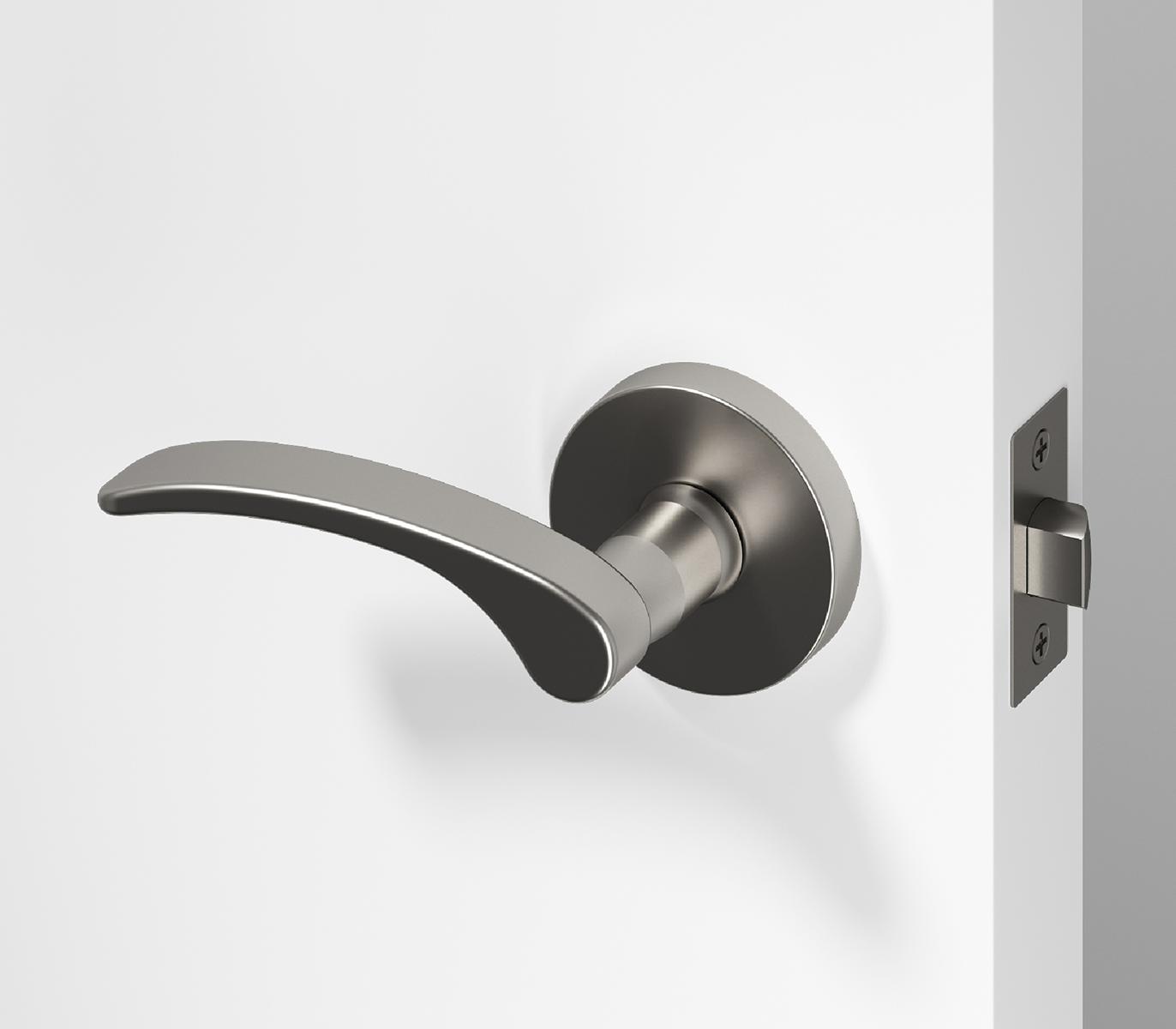
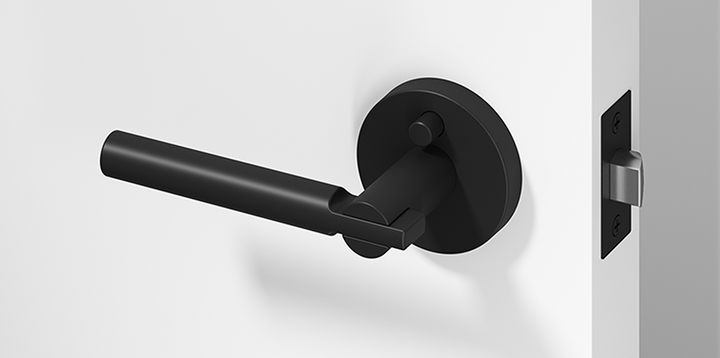
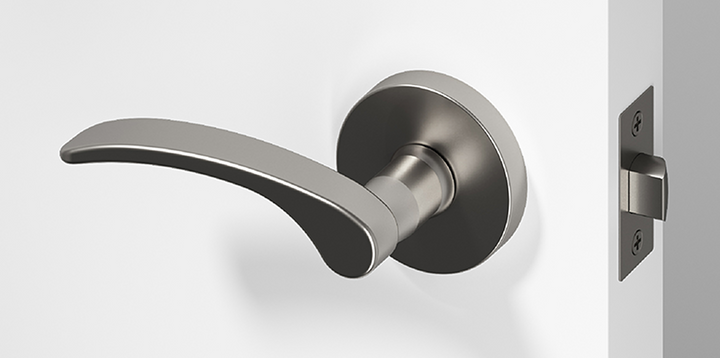
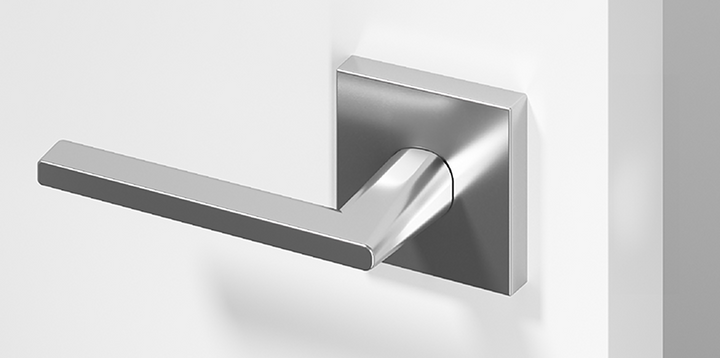
Matte black is graphic and grounding — the strongest dominant finish in a cool or high-contrast palette. Brushed nickel is the universal neutral that plays with almost anything. Chrome brings brightness and works hardest in bathrooms and high-contrast minimalist rooms. Champagne gold is the warm accent — neutral enough to sit beside cool grays and white oak without turning yellow, which makes it the ideal contrast partner for matte black.

The one principle behind every good mix: warm vs. cool
Almost every mixing question — "do these two go together?", "why does this look off?" — comes back to one idea. Every finish reads either warm or cool. Champagne gold and brass are warm. Chrome, brushed nickel, and matte black read cool or neutral. The mixes that look deliberate pair one warm finish with one cool one, so the contrast is obvious and clearly intended. The mixes that look like mistakes put two finishes of the same temperature next to each other when they're close but not identical — chrome beside brushed nickel is the classic offender. Get the warm-cool pairing right first, and the rest of the rules below are just refinements.
Pick a dominant finish, then one accent — the 70/30 split
Every cohesive mixed-metal home has a hierarchy. Choose one finish to carry roughly 70% of the hardware — the finish that appears on most of your door handles and sets the tone — and let a second finish handle the remaining 30% as a deliberate accent. For a warmer, subtler mix, push it to 80/20. The point is that one finish clearly leads; a fifty-fifty split is where rooms start to look undecided.
In a cool or contemporary palette, matte black or brushed nickel makes the stronger anchor. In a warmer, oak-and-travertine palette, champagne gold can lead instead.
Keep the silhouette identical — change only the finish
This is the rule that makes mixing safe, and it's the one most guides skip. When every door in the house wears the same lever shape, the eye reads a single, coherent design — even when the finishes differ from room to room. The contrast becomes a choice instead of an accident.
It's also exactly what OKUN is built for. Pick one collection — the slim rectangular Valli, the cylindrical Zen, the elongated Halo — and it ships in all four finishes across passage, privacy, and dummy functions. So a matte black lever on the office door and a champagne gold one on the powder room are unmistakably the same family. Same profile, same proportions, different tone. That's mixed metals that looks specified, not improvised.
Tap a finish to see the Valli lever in each tone. Same shape, same proportions — only the finish changes.

Graphic and grounding. The strongest dominant finish for a cool or high-contrast palette.
From $49.99 · 1, 2 & 6 packs
Shop Matte Black
The universal finish that plays with almost anything. A safe lead for whole-home cohesion.
From $49.99 · 1, 2 & 6 packs
Shop Brushed Nickel
Bright and clean. Works hardest in bathrooms and crisp, high-contrast minimalist rooms.
From $49.99 · 1, 2 & 6 packs
Shop Chrome
Warm without turning yellow. The ideal 30% accent beside matte black, cool grays, or white oak.
From $49.99
Shop Champagne GoldMatch hinges to the door, not the handle
A small detail with an outsized effect: when you put a contrasting handle on a door, match the hinges to the door rather than the lever. A dark door reads cleaner with dark hinges even if the handle is gold. Mismatched hinges are the tell that turns an intentional mix into a careless one — get them right and the contrast looks resolved.
Two finishes per room. Three is the ceiling.
Contrast creates interest; too much contrast creates noise. Keep a single room to two finishes in most cases, three at the very most. Past three, a space stops reading "curated over time" and starts reading "hardware catalog." If you want more variety across the home, vary the dominant finish between rooms rather than stacking finishes within one.

A room-by-room starting point
Not a rulebook — a calibrated place to begin. Adjust the dominant finish to your palette and keep the silhouette constant throughout.
| Space | Dominant (70%) | Accent (30%) |
|---|---|---|
| Open-plan living / hall | Matte black | Champagne gold |
| Primary bedroom | Brushed nickel | Matte black |
| Bathroom & powder room | Chrome | Brushed nickel |
| Home office | Matte black | Champagne gold |
| Warm / oak-forward rooms | Champagne gold | Matte black |
Pairings that reliably work
Matte black with champagne gold is the standout 2026 combination — dark-cool against warm-metallic, maximum deliberate contrast. Brushed nickel with chrome is the quiet cool-on-cool mix for bathrooms. Matte black with brushed nickel is the safest contemporary pairing of all. The one to watch: avoid sitting chrome and brushed nickel right beside each other on the same door — they're close enough in tone to look like a mistake rather than a mix.
One silhouette. Four finishes. Every door.
Mix matte black, brushed nickel, chrome, and champagne gold — same OKUN profile, across every room.
Shop OKUN Door HandlesCommon questions
Can you mix door handle finishes in the same house?
Yes. The one-metal rule is retired. Use the 70/30 rule — one dominant finish, one accent — cap each room at two to three finishes, and keep the handle silhouette consistent so the mix looks intentional.
Do matte black and brass go together?
Yes — it's one of the strongest 2026 combinations. Cool-dark against warm-metallic creates deliberate contrast. Let one lead rather than splitting evenly: matte black dominant with champagne gold as the accent, or the reverse.
What should stay consistent when mixing finishes?
The handle shape and the hinges. A constant silhouette makes the eye read one design even as finishes change; matching hinges to the door keeps the contrast looking chosen. OKUN's single collection across four finishes keeps the profile identical while the tone varies.
How many finishes is too many in one room?
Two to three is the ceiling. Beyond three, a room reads disorganized. One dominant, one accent, and at most one supporting finish.
Which finishes shouldn't sit side by side?
Chrome and brushed nickel are close enough in tone that placing them on the same door can look like an error rather than a mix. Pair each with a higher-contrast finish instead.
Do door handles have to match throughout the house?
No. Cohesion comes from a common thread — usually the same handle shape or finish family — not from every door being identical. Keep one dominant finish across most doors, vary a second by room, and hold the silhouette constant everywhere.
Do door handles need to match the hinges?
Not exactly — coordinate, don't necessarily match. The clean rule is to match hinges to the door, not the handle: dark door, dark hinges, even with a contrasting lever. If nickel hinges are already installed and you want black handles, that can still look intentional as long as both finishes are repeated elsewhere in the room.
Do door handles need to match faucets and cabinet hardware?
No, but they should relate. In kitchens and baths, let the door handle carry the dominant finish and let lighting or plumbing bring the accent. Share an undertone or contrast on purpose — don't aim to match every metal exactly.
Should upstairs and downstairs match?
They don't have to. A practical shortcut: keep every handle on the same floor consistent, then let the dominant finish shift between floors. With the shape constant throughout, that reads intentional, not mismatched.
What is a split finish?
The same handle model with one finish on the hallway side and a different finish on the room side. It's the fix for a door facing two palettes — a matte black hallway, a chrome bathroom interior. Same model and size, so the halves align; only the finish differs.
Does mixing finishes look cheap or date quickly?
It looks cheap only when it looks accidental — too many finishes, no dominant tone, or two near-identical finishes. With a clear 70/30 hierarchy and one constant shape, mixing reads as collected and custom. Matte black, brushed nickel, and chrome are long-running finishes, so a disciplined mix ages well.
Do front door and interior hardware need to match?
No. A heavier entry set up front and lighter interior levers inside is normal, tied together by a shared finish family. Keeping the interior-facing side of the front door in the same finish as nearby interior handles makes the transition feel deliberate.
How do warm and cool finishes affect mixing?
Every finish reads warm or cool. Champagne gold and brass are warm; chrome, brushed nickel, and matte black read cool or neutral. The strongest mixes pair one warm with one cool. Avoid two finishes of the same temperature that are close but not identical — like chrome beside brushed nickel — they look like a near-miss.