

Why does rental door hardware fail so much faster?
Do the arithmetic of turnover: a family home's bedroom door meets a handful of hands, gently, for years. A rental's meets a new set every few nights — hurried, unfamiliar, luggage-laden — plus cleaning chemicals between every stay. A well-booked unit compresses a decade of residential wear into a couple of seasons.
Guests are also harder on hardware in specific, predictable ways. They turn levers the wrong direction, hang wet towels and garment bags on them, and let doors swing into walls. None of this is malice; it's unfamiliarity — nobody babies a house they'll leave on Sunday. Builder-grade hardware announces this history quickly: the wobble, the drooping lever, the finish worn gray at the grip.
And worn hardware costs more than replacements. A rattling bathroom lever reads as neglect in the exact room where guests are most alert to it — the kind of detail that surfaces in reviews without ever being named. Hosts already know this logic from the other side: it's why the "builder-grade look" is the first thing a renovation removes.

Which lock goes on which door in a rental?
Think in three zones: the entry (smart lock territory), the owner's closet (keyed), and everything else (keyless interior hardware). Mixing the zones — a keyed lock on a guest bedroom, a privacy lock on the owner's closet — creates exactly the problems each zone's hardware was designed to prevent.
| Door | Hardware | Why |
|---|---|---|
| Entry / exterior | Smart lock or keyed deadbolt | Self-check-in and real security — a separate purchase from interior hardware |
| Guest bedrooms | Privacy lever (keyless) | Push-button lock guests expect; pinhole release the host controls |
| Bathrooms | Privacy lever (keyless) | Same lock, plus a PVD finish that shrugs off daily steam and cleaners |
| Hallways, laundry, pantry | Passage lever | Latches shut, never locks a guest out of anything they're allowed in |
| Guest closets, bi-folds | Dummy pulls | Nothing to lock, nothing to break, $29.99 a door |
| Owner's closet / supply room | Keyed lock (separate) | A privacy lock's release is guest-openable by design — this door needs a real key |
Honest scope note: OKUN makes the interior zone — keyless privacy, passage, and dummy levers. Entry smart locks and keyed owner's-closet hardware come from the security aisle, and that's the correct division of labor.
Why keyless privacy locks end the lockout problem
Because both halves of the lockout equation disappear: guests can't lose keys that don't exist, and a door locked from inside — by a child, a gust, or a departing guest's mistake — opens from outside in seconds through the pinhole emergency release. No locksmith, no drilling, no 2 a.m. phone call escalating into a refund request.
The mechanism is built for exactly this situation. The button auto-releases when the inside lever turns, so a guest physically cannot leave a room locked behind them at checkout. And when a door does end up locked — toddlers find the button irresistible — the included tool, or any straightened paperclip, presses the release pin and the door opens. The full rescue procedure is in our guide to unlocking a privacy door handle; the host move is to make it a non-event in advance: tape one unlock tool on top of each privacy door's casing, and put one line in the house manual — "bedroom and bathroom doors lock with the button; if one locks by accident, the pin above the door frame opens it."
Compare that to keyed interior locks in a rental: keys migrate between key rings, copies multiply with every turnover crew, and eventually a guest locks a bedroom and leaves with the key in a jacket pocket somewhere over Ohio. Keyless privacy hardware — covered in depth in our complete lockable handle guide — deletes that entire genre of problem.
A guest should never need to ask how a door works.
A host should never need to drive over because one did.
What actually survives a hundred guests a year?
Solid metal and PVD — the same two specs that separate architectural hardware from builder-grade, doing rental duty: solid 304 stainless and brass levers hold their threads and spring action under constant use, and the PVD finish resists the hand oils, cleaning sprays, and bathroom humidity that eat electroplated finishes alive between deep cleans.
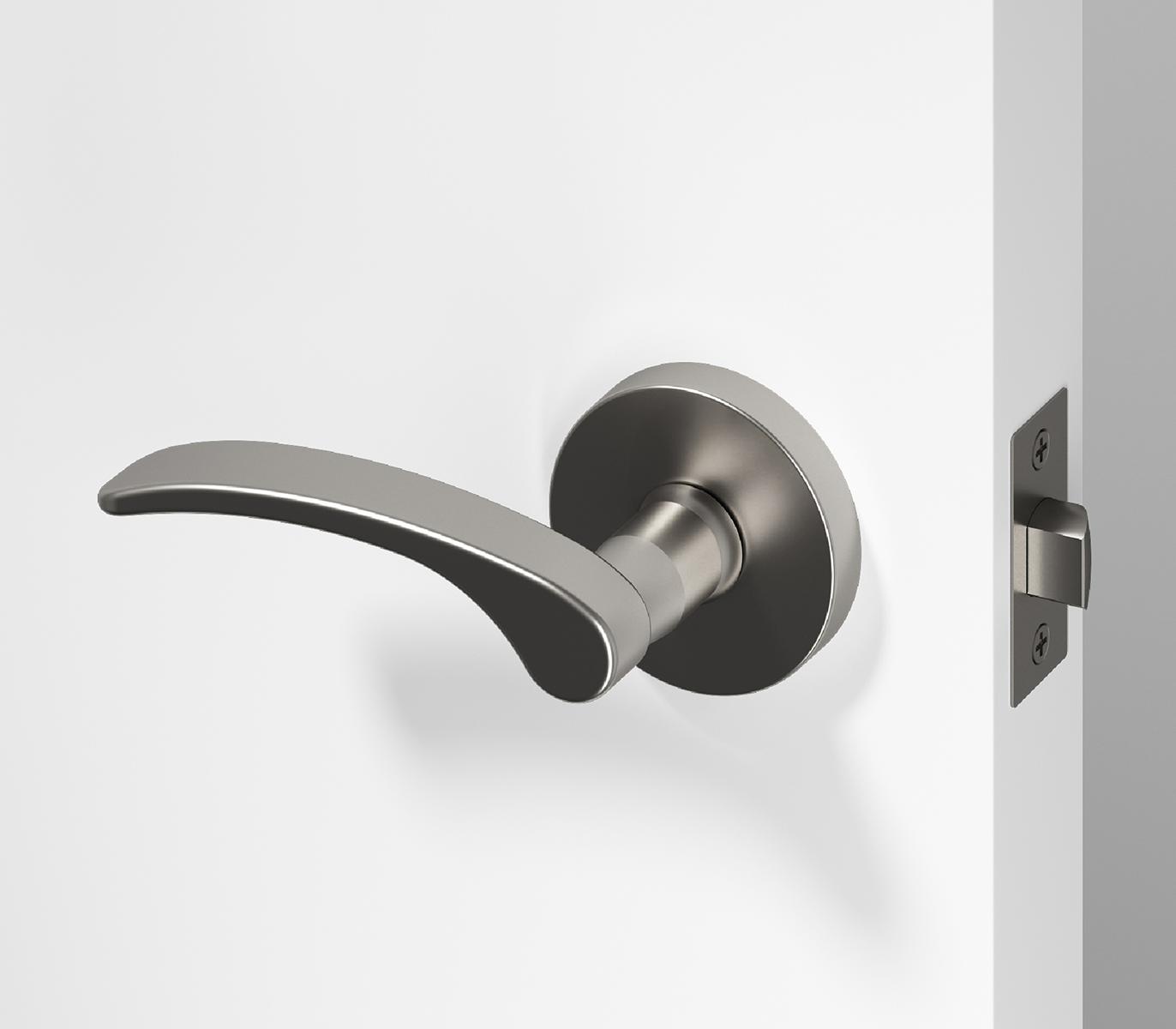
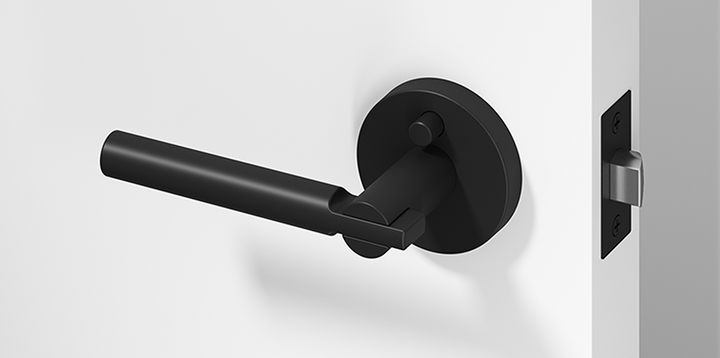
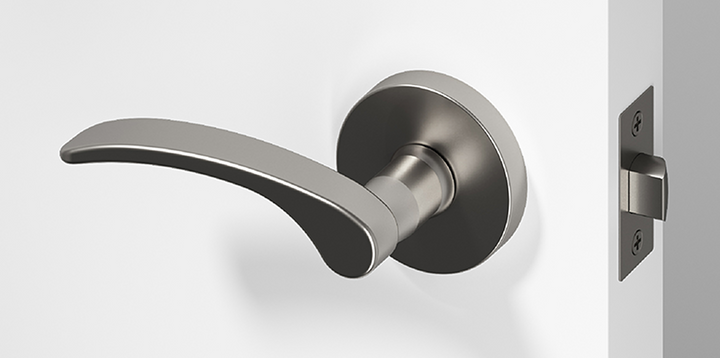
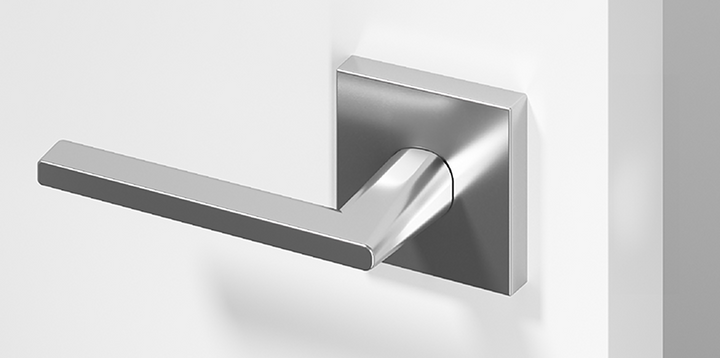
The finish question deserves the host's lens rather than the homeowner's. Brushed Nickel and Champagne Brushed Gold hide fingerprints and micro-scratches between cleanings — the practical champions for high-turnover units. Matte Black is the listing-photo winner, reading crisp and intentional against light walls in exactly the wide shots browsers scroll through. Chrome suits bright, white-tiled units but shows prints fastest. All four are PVD with a lifetime warranty against tarnishing, flaking, and corrosion — so the durability column is identical, and the decision is purely camera versus cleaning schedule.
One more host-specific spec: consistency across the unit. Every OKUN collection ships in all four finishes and all three functions, so one finish and one profile can run the entire property — and when a handle does eventually need replacing, the same SKU is still there to order, keeping door twelve matching door one.

What's the 60-second hardware check between stays?
Add three motions to the turnover clean: wiggle, click, press. Wiggle each lever for play, click each door shut to confirm the latch seats, press-and-release each privacy button. Sixty seconds per unit, and hardware problems get caught by your cleaner instead of your next review.
When the check catches something: a loose lever is a ten-minute set-screw fix, a door that won't latch is a strike-plate adjustment — both are in our door handle troubleshooting guide, written for exactly these repairs. A drooping lever or grinding mechanism, though, is terminal, and in a rental the calculus tips even harder toward replacement than at home: a $50 handle installed in 15 minutes — the sequence is in the install guide — is cheaper than one refunded night.
Keep one spare set per function in the owner's closet. Reversible handing means the spare fits any door in the unit, and a mid-stay failure becomes a 15-minute fix instead of a hardware-store scramble on a Saturday.
What does re-hardwaring a rental actually cost?
Roughly $450–$600 for a typical 10-door unit, self-installed in an afternoon — the cost of two or three nights' revenue, for hardware warranted longer than most hosts will own the property.
| Doors | Count | Hardware | Cost |
|---|---|---|---|
| Bedrooms | 2 | Privacy lever, $55–$75 | $110–$150 |
| Bathrooms | 2 | Privacy lever, $55–$75 | $110–$150 |
| Hallway, laundry, pantry | 3 | Passage lever, $49.99 | $150 |
| Closets (incl. one spare set) | 3 | Dummy / passage, $29.99–$49.99 | $90–$150 |
| Unit total | 10 | One finish, one afternoon | ≈ $460–$600 |
Multi-unit operators should note the 2- and 6-pack SKUs — the same whole-property math that works for general contractors ordering across builds works for a portfolio of listings, and consistent hardware across units simplifies both spares and listing photography.
Frequently Asked Questions
Rental door hardware, host to host.
Should Airbnb bedroom doors have locks?+
Yes — guests expect lockable bedroom and bathroom doors, and listings in shared spaces are often required to provide them. The right hardware is a keyless push-button privacy lever: guests lock from inside in one press, and the host can always release it from outside through the pinhole with the included tool — no keys to hand out, track, or lose.
What door hardware holds up best in a short-term rental?+
Solid-metal levers — 304 stainless steel and brass — with a PVD finish. A rental door sees years of home use per season, and hollow builder-grade handles loosen, rattle, and shed finish under that pace. PVD resists the constant hand contact, cleaning chemicals, and humidity that wear standard electroplated finishes through.
Do guests get locked out with push-button privacy locks?+
Effectively never in a way that needs the host: the button auto-releases when the inside lever turns, so an empty room can't stay locked, and any locked door opens from outside in seconds through the pinhole release with the included tool or a paperclip. Tape one unlock tool above each privacy door's casing and the 2 a.m. lockout message disappears from your life.
What about the entry door and the owner's closet?+
Those are different categories. The entry door belongs to a smart lock or keyed deadbolt — self-check-in hardware, not interior hardware. An owner's closet needs a keyed lock, since a privacy lock's emergency release is intentionally guest-openable. Interior privacy, passage, and dummy hardware covers every other door in the unit.
How much does it cost to re-hardware a rental unit?+
With OKUN hardware, a typical 10-door unit runs roughly $450–$600: privacy sets at $55–$75 for bedrooms and baths, passage at $49.99 for hallways and utility doors, dummies at $29.99 for closets — with 2- and 6-packs for multi-unit math. Installation is DIY at about 15 minutes per door.
Which finish is best for rental properties?+
Brushed finishes — Brushed Nickel or Champagne Brushed Gold — hide fingerprints and micro-wear best between cleanings, while Matte Black photographs strongest in listings against light walls. All four OKUN finishes are PVD with a lifetime warranty against tarnishing, flaking, and corrosion, so the choice is aesthetic, not durability.
Hardware that checks in once
Keyless privacy for every guest door, solid metal that outlasts the booking calendar, and 2- and 6-packs for the whole portfolio — installed with a screwdriver between checkouts.
Shop Privacy Levers Browse All Hardware