

Why is the door locked in the first place?
On a modern lockable door handle, only one thing locks the door: the push-button on the interior rosette. Someone — a child, an elbow, a bathrobe pocket — pressed it, and then the door closed. The good news is that the same engineering that made it easy to lock made it just as easy to release from outside.
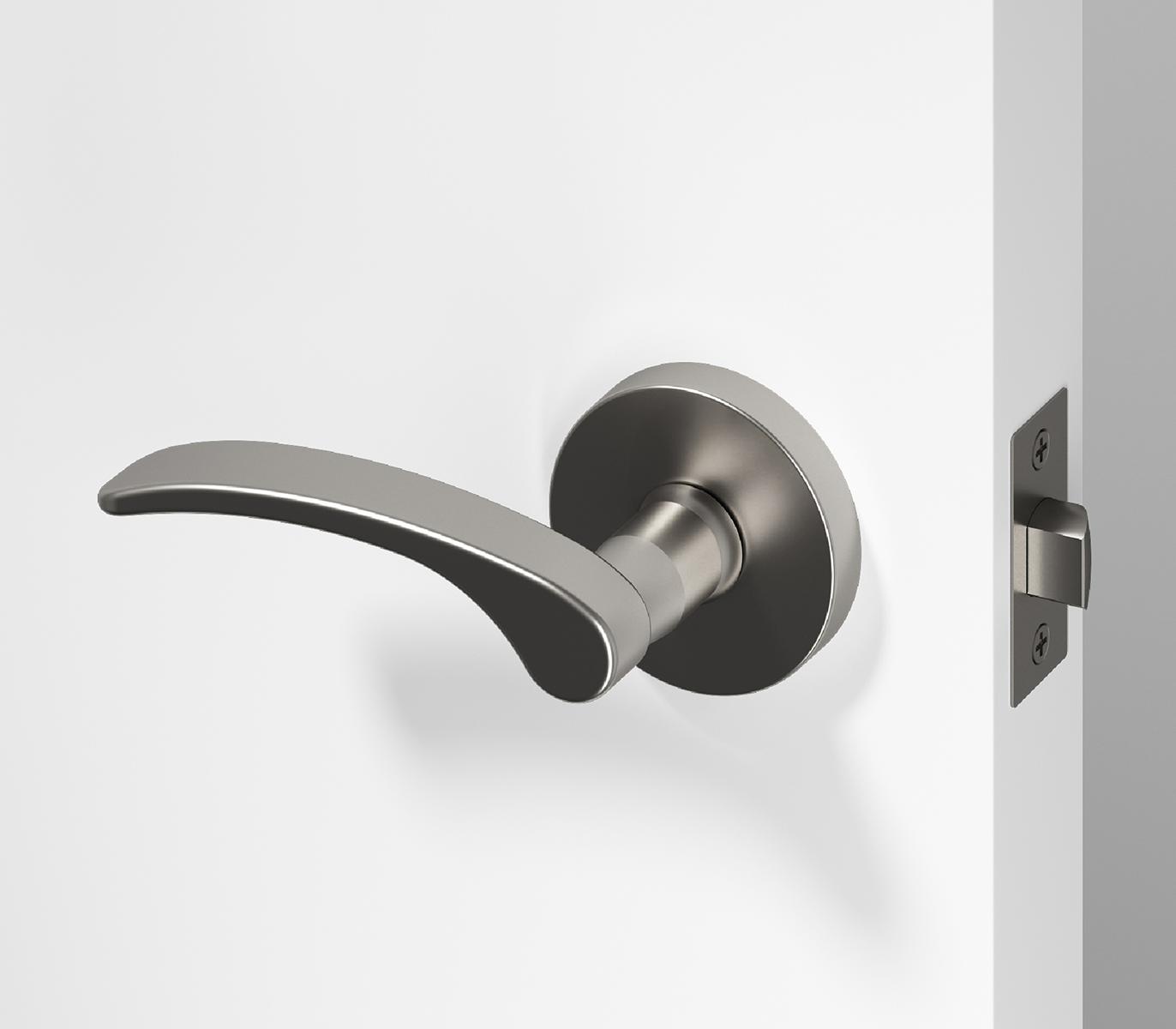
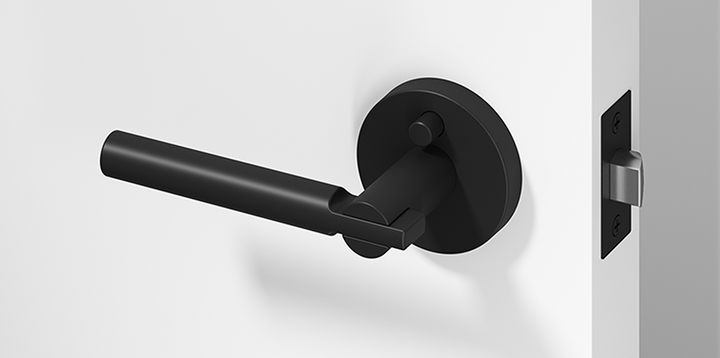
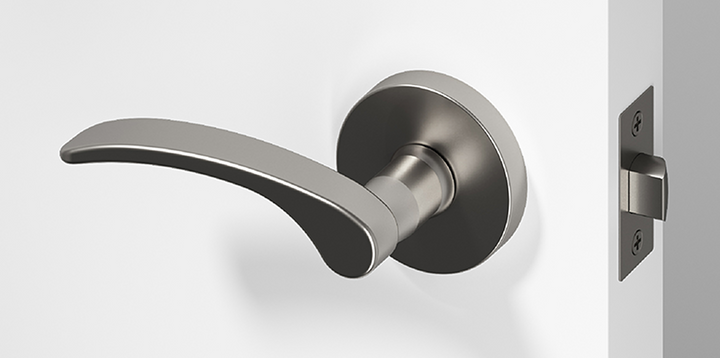
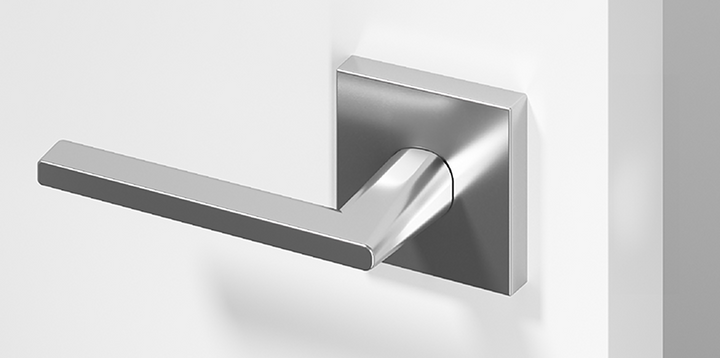
This is the privacy function, the standard hardware for bedrooms and bathrooms. Its whole design brief is privacy without peril: lock in one press from inside, release in one turn from inside, and — for exactly the situation you're in now — an emergency override from outside. If you want the full picture of how the mechanism works, our complete guide to lockable door handles covers the anatomy in detail. This post covers the rescue.

How do you unlock it from outside? (Four steps)
Locate the pinhole, insert something pin-shaped, press until it clicks, turn the lever. Here's each step with the detail that makes it foolproof:
Find the pinhole
Look at the center of the exterior rosette — the round trim disc behind the lever on the hallway side of the door. On a privacy handle there's a small round hole there, roughly the diameter of a paperclip wire. No hole and a keyway instead? Skip to the lock-identification table below.
Insert the tool
Use the emergency unlock tool that shipped with the handle, a straightened paperclip, or a household sewing needle. Insert it straight into the pinhole — perpendicular to the door, not at an angle.
Press gently until it clicks
Push with light, steady pressure. You're depressing a spring-loaded pin, and you'll feel a small give as the interior button pops back out. No jiggling, no turning, no force — if it resists, re-aim and press straight.
Turn the lever
The exterior lever now turns normally. Open the door. The lock has fully reset itself — there's no re-arming step, and nothing to put back.
On OKUN privacy handles, the emergency tool is included in every box; the same steps are illustrated in the installation manual.
What household tools work in the pinhole?
Anything stiff, straight, and thinner than the hole: the included tool first, a straightened paperclip as the universal backup, a sewing needle in a pinch. The one thing that never helps is force — the release takes finger pressure, not leverage.
| Tool | Works? | Notes |
|---|---|---|
| Included emergency tool | Best | Sized exactly for the pinhole; ships in every OKUN privacy box |
| Straightened paperclip | Yes | The universal backup — stiff enough, safe for the mechanism |
| Sewing needle / safety pin | Yes | Use the blunt end where possible; mind your fingers |
| Small flathead screwdriver | For slotted releases | The answer for older turn-button locks with a slot instead of a hole |
| Toothpick / matchstick | No | Snaps off in the hole and creates a real problem |
| Knife tip | No | Unsafe, and it chews the rosette finish |
The pinhole isn't a weakness in the lock.
It's the reason this story has a short, boring ending.
Not sure which lock you're looking at?
Check the exterior face: a pinhole means push-button privacy, a slot means turn-button privacy, and a keyway means a keyed lock — which is a different situation entirely, solved by the key, not by the release.
| You see | Lock type | How to open it |
|---|---|---|
| Small round pinhole | Push-button privacy | Pin-shaped tool, press straight — the four steps above |
| Narrow slot | Turn-button privacy | Small flathead or coin — insert and turn gently until it stops |
| Keyway (keyhole) | Keyed lock | The matching key; no emergency release exists by design |
| Nothing at all | Passage or dummy | It isn't locked — check for a binding latch or a swollen door |
That last row matters more than it looks: a door that won't open isn't always a locked door. Seasonal humidity swells doors, and a strike plate a few millimeters out of alignment makes a passage handle feel "locked." Lift or press the door slightly while turning the lever — if it opens, the fix is a strike-plate adjustment, not a lock release. And if you're staring at a keyway on an interior door with no key in sight, that's the moment many homeowners decide keyed interior locks aren't worth it; the case for keyless privacy hardware is one our lockable handle guide makes in full.

How do you make sure this never happens again?
Three habits, ninety seconds total: store the unlock tool on top of the door casing outside each privacy door, test the release once so your hands know the motion, and teach older kids that the button is for people inside the room.
The casing trick. The top edge of the door trim, hallway side, is invisible, dust-protected, and always exactly where the emergency is. One tool per privacy door ends the "where did we put it" scramble forever.
The one-time drill. Lock the door from inside, close it, release it from outside. Thirty seconds of practice converts a future panic into a chore.
Trust the auto-release. On a push-button handle, turning the inside lever pops the button out automatically — so an empty room physically can't stay locked behind the last person out. If your current interior locks can do that (turn-buttons and keyed locks can), that's the design flaw the push-button generation fixed.
When is a stuck lock telling you to replace the handle?
When the lockouts stop being anyone's fault. A button that engages on its own, sticks halfway, or won't hold; a lever that droops or grinds; a latch that needs a shoulder to cooperate — that's a worn mechanism, and no amount of paperclip skill fixes wear.
The economics are simple: an interior lock mechanism isn't rebuilt, it's replaced — and replacement is a 15-minute, screwdriver-only job on any standard US door, as our step-by-step installation guide shows. An OKUN privacy handle drops into the same 2 1/8" bore your old hardware left behind, with the adjustable latch fitting both standard backsets and reversible handing fitting either door swing — and the fresh push-button mechanism, emergency tool included, resets the lockout clock to zero. As for how long the replacement itself will last, the solid 304 stainless build and lifetime-warranted PVD finish are covered in our durability & care guide — the short version is decades.

Frequently Asked Questions
Locked doors, unlocked — the short answers.
How do I unlock a bedroom or bathroom door without a key?+
Interior privacy locks don't use keys. Insert a pin-shaped tool (paperclip, needle, or the included unlock tool) into the pinhole on the exterior rosette, press gently until the pin releases, and turn the lever.
I lost the emergency unlock tool — what now?+
A straightened paperclip is a full substitute for pinhole releases; a small flathead screwdriver or coin handles slotted releases. The tool is a convenience, not a unique key.
The pin releases but the lever still won't turn — why?+
The latch is probably binding against a misaligned strike plate. Push, pull, or slightly lift the door while turning the lever. If that frees it, adjust the strike plate; if the lever grinds regardless, the mechanism is worn and due for replacement.
Can I drill out an interior privacy lock?+
You'll essentially never need to — the pinhole release exists precisely so drilling, hinge removal, and forced entry stay in the movies. Try the release first; it works on any functioning push-button privacy lock.
Are pinhole releases a security risk?+
A privacy lock provides privacy, not security — the override is intentional, so a locked bathroom is never an emergency. Actual security belongs at the home's perimeter, with keyed locksets and deadbolts on exterior doors.
How often do lockouts happen with push-button handles?+
Rarely, and almost always with small children involved — because the auto-release means an adult leaving a room can't lock it behind them. With the tool stored on the casing, even the toddler scenario resolves in seconds.
Retire the paperclip
If today's lockout came courtesy of worn, builder-grade hardware, the fix is fifteen minutes away: solid-metal OKUN privacy handles with a fresh push-button mechanism — emergency tool included, naturally.
Shop Privacy Handles