

OKUN · Hardware Guide
The lever has become the default line of the modern interior — architectural, horizontal, quiet. But there are still four doors in a typical house where a round knob is the better tool, and a lever-only brand telling you otherwise would be selling, not advising.
Is the ease-of-use question actually settled?
Yes — and that is exactly why it's the least interesting part of this comparison. A lever opens with a downward push instead of a grip-and-twist, which makes it easier with full hands, wet hands, gloves, or reduced grip strength. That case is not seriously disputed by anyone, including knob defenders.
We've written that argument out in full in our guide to why levers are easier to use for every age, so this post won't re-litigate it. Take it as settled and move on to the part nobody writes about.
The interesting question is not which shape is easier. It's which shape the modern interior is actually built around — and then where that shape is the wrong answer anyway.
Why do lever handles read modern and knobs read traditional?
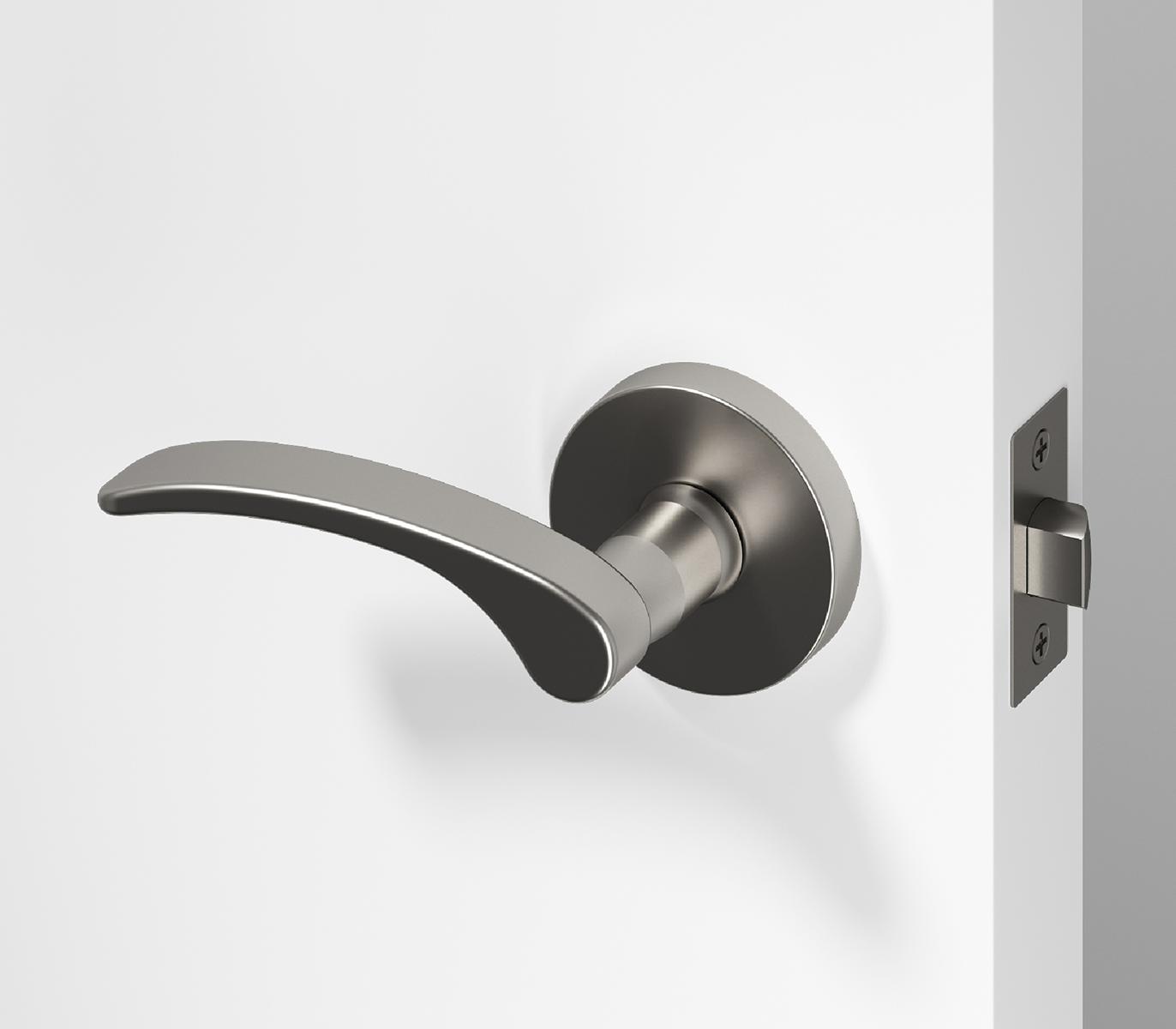
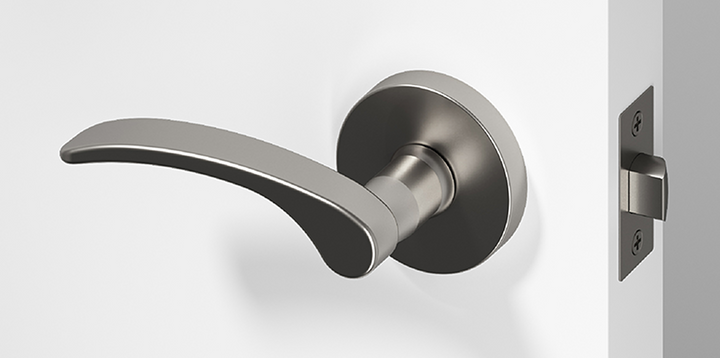
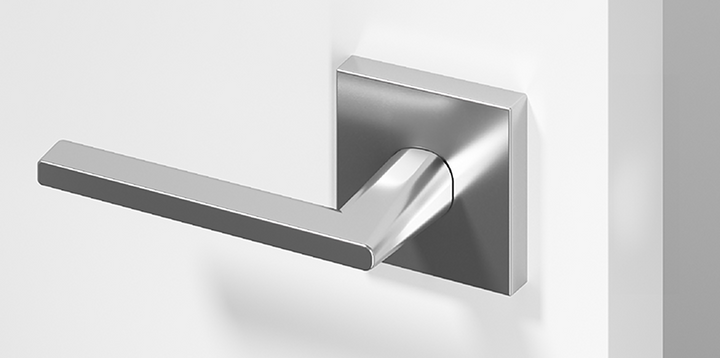
Because a lever is a line and a knob is a sphere, and the contemporary interior is built out of lines. Flush-panel doors, slim casing, linear lighting, handleless cabinetry, long tapered tapware — the whole visual grammar of a modern home is horizontal and continuous. A lever belongs to that grammar. A knob interrupts it.
This is the part of the decision people feel before they can explain it. Stand in a hallway of flush white doors and a round knob reads as an object that was placed on the door afterwards. A slim horizontal lever reads as part of the door's drawing — the one deliberate mark on an otherwise plain plane.

The Continental look went mainstream. Europe standardized on lever hardware decades ago, and the long, low-profile Continental lever has been the designer reference for years. What changed recently is that it stopped being a specifier's choice and became the ordinary expectation in North American interiors — the shape people now picture when they picture a new house.
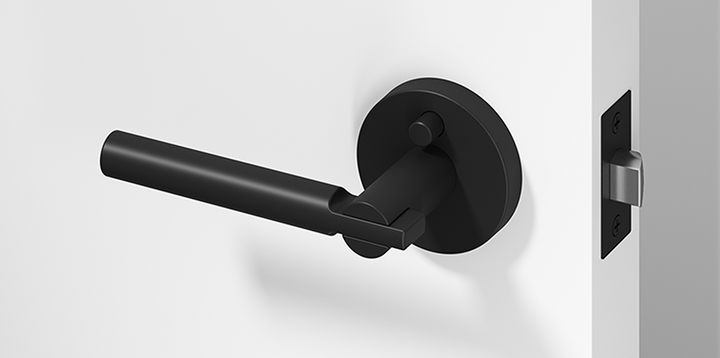
Finish reinforced it. Matte black and brushed warm metals dominate contemporary hardware, and both of those finishes want a linear form to sit on. A matte black sphere reads heavy; a matte black line reads architectural. The finish trend and the shape trend arrived together, which is why they feel like one thing. Our guide to the door handle trends defining 2026 goes through the finish side of that in detail.
And hardware is the cheapest way to buy the look. You cannot casually replace your doors, your casing or your cabinetry. You can replace every handle in the house in an afternoon for less than the cost of one good light fixture, and it changes the read of every room you walk through. That is why hardware is the most over-delivering line item in a cosmetic refresh.

The honest limit on all of this: it is a statement about modern and transitional interiors, not a universal ranking. On an original period door the same reasoning runs the other way, which is the third of the four cases below.
When is a door knob still the right choice?
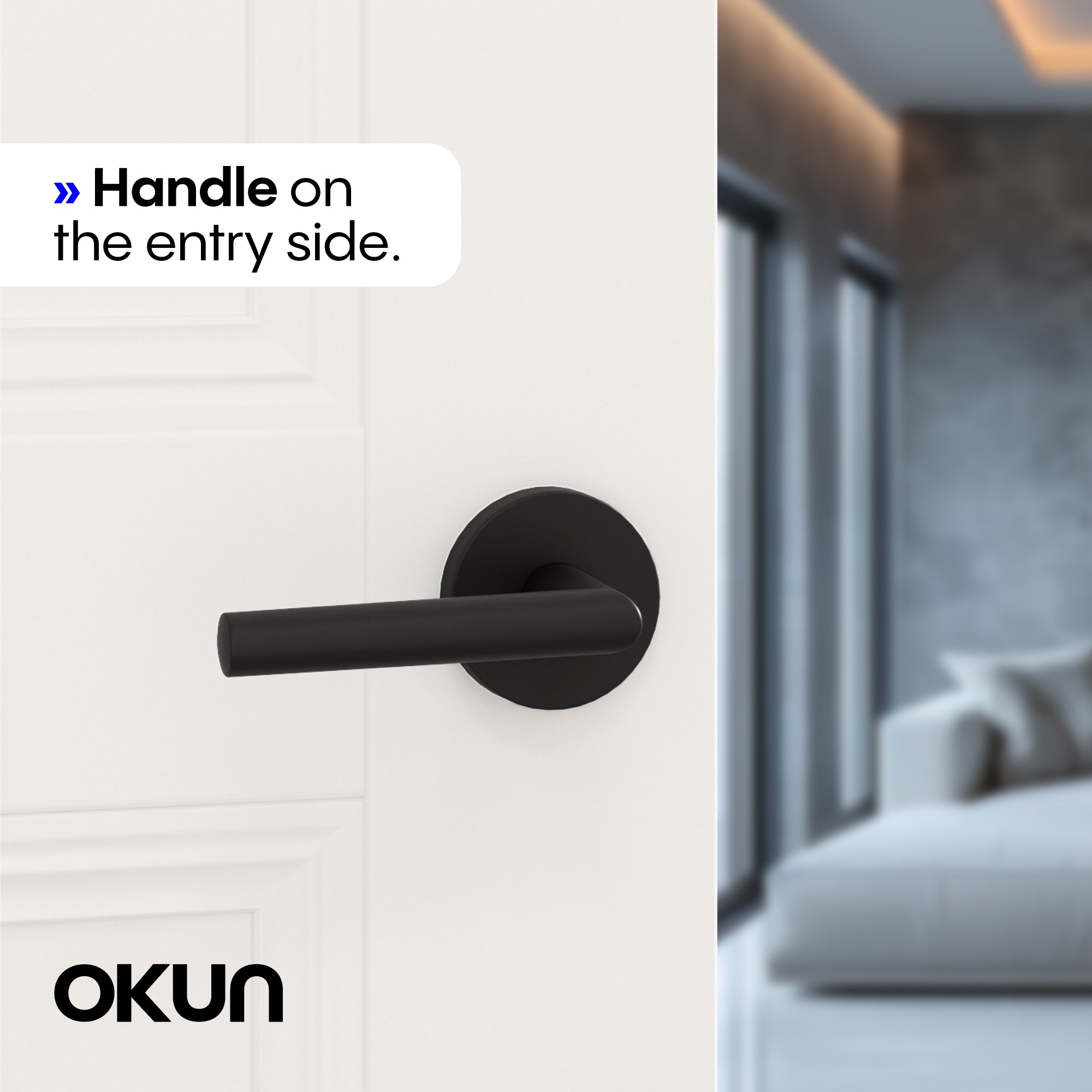
Four situations: pets that have learned to open levers, doors that must stay closed, period homes, and tight spaces where a lever catches clothing. In each of these the knob's supposed weakness — that it is harder to operate — is precisely the property you want.
1. You have a cat, or a tall dog
This is the single most concrete difference between the two shapes, and it is the one homeowners discover after they've already changed every door in the house.
A cat opens a lever by jumping at it, hanging from it, or swatting downward with its body weight. A dog opens one by pawing or nosing it down. Owners report both routinely, and they report something worse: the behaviour spreads. One animal works it out and the others copy, and a dog that can open doors will let the other dogs out too.
A cat essentially cannot open a round knob. It requires simultaneous grip and rotation, and a paw cannot do it. If you are trying to keep a cat out of a nursery, a home office, or a room with houseplants, a knob on that one door solves the problem permanently and costs nothing else.
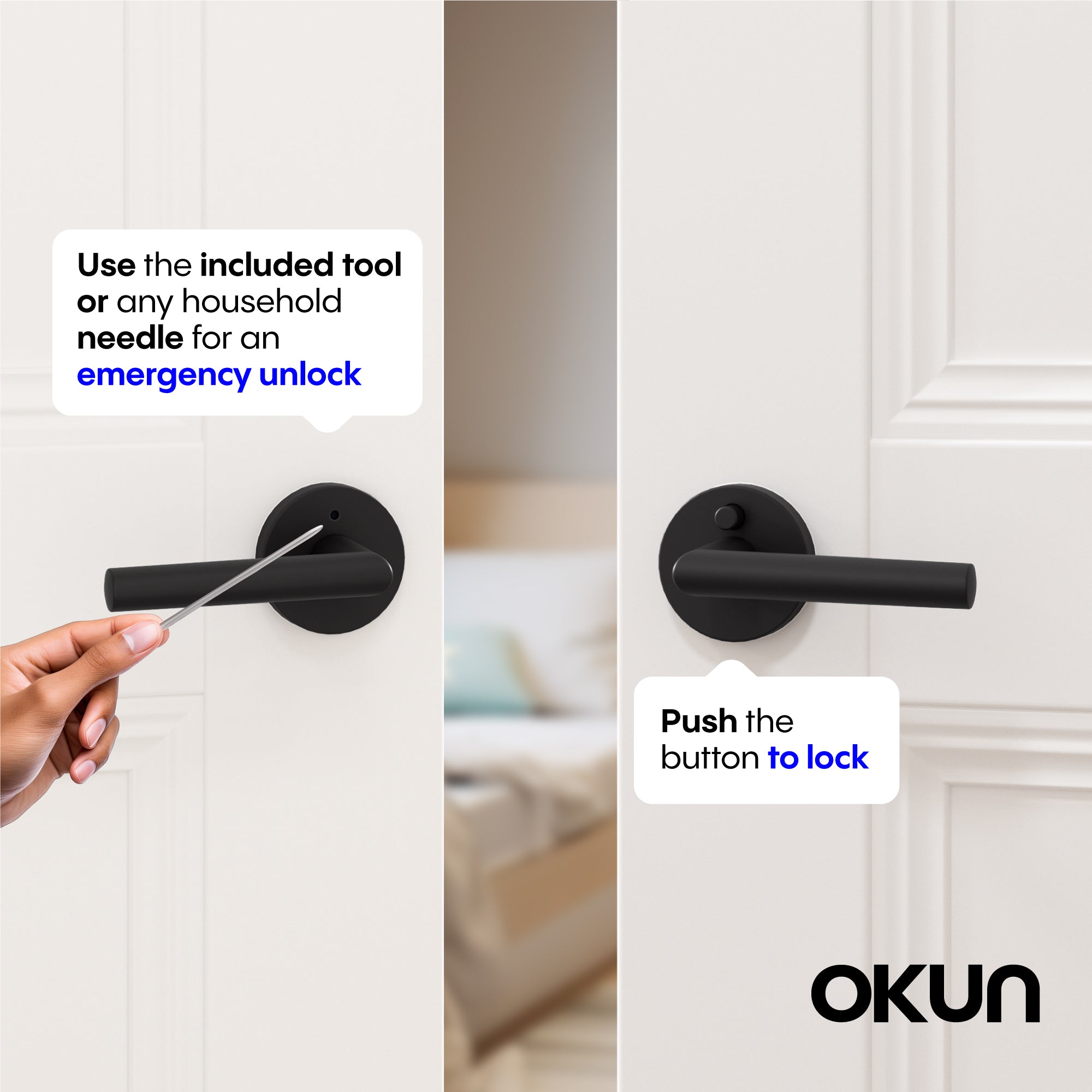
If you'd rather keep the lever, there are three real fixes. Fit a privacy lever and press the button — the outside lever then spins free and no amount of pawing retracts the latch. Install the lever inverted so it must be lifted rather than pushed, which defeats most animals, though it confuses guests and not every lever can be fitted that way. Or add a secondary latch high on the door, above the animal's reach, which is the most durable answer of the three.
2. The door needs to stay shut
Levers can be bumped open by a hip, a vacuum cleaner, or a dog leaning on the door. A knob effectively cannot. On a basement stair, a garage passage, a utility room holding cleaning chemicals, or a pantry a large dog raids, that resistance is the whole point of the hardware.
The same logic applies more seriously in households caring for someone with dementia, where a door that takes deliberate effort to open is a safety feature rather than an inconvenience.
Here too a privacy lever with the button engaged gives you the same containment without changing the shape, which is usually the better answer in a house where every other door is a lever.
3. It's a period home and the lever will look wrong
On a Victorian, Craftsman, colonial or pre-war door, a contemporary lever reads as an anachronism in a way that no amount of finish matching fixes. Cut-glass, porcelain, octagonal and unlacquered brass knobs are period-correct, and in a house with original trim and original doors, period-correct is usually the right call.
This is a genuine limit on what a modern lever line can do for you, and it's worth saying plainly: if you are restoring a 1910 house, buy the knobs. Modern architectural levers belong on modern and transitional doors — flush panels, clean stiles, simple casing — where the line of the lever reads as deliberate rather than imported. If you're weighing the aesthetics, our guide to matching handle finishes to your door style covers how to make that judgment.

4. It's a tight spot where a lever catches clothing
The most common complaint about levers, by a wide margin, is that they snag. Pockets, sleeves, shirt tails, belt loops, bag straps, laundry baskets. People report torn clothing rather than mild annoyance, and it happens most in the places where a body passes close to the door: the end of a narrow hallway, a doorway beside a counter, a corridor where the door swings into traffic.
A knob has nothing protruding, so nothing catches. If you have one pinch point in the house where this keeps happening, that door is a legitimate knob.
Worth noting the counter-argument: lever projection varies, and a lever with a tighter return toward the door face snags far less than a straight bar that ends in mid-air. Shape matters more than category here.
The knob's weakness is that it resists you. On four doors in a typical house, that is exactly what you want it to do.
Do building codes require lever handles in a house?
No. There is no US residential requirement for lever handles in a single-family home. The confusion comes from mixing up four separate things — the ADA, the Fair Housing Act, commercial building codes, and one Canadian city — so it's worth separating them.
The ADA does not apply to private residences. It is a civil rights statute covering places of public accommodation and commercial facilities. Your own house is not covered, at all, by any part of it.
Where the ADA does apply, it specifies performance, not shape. Its door hardware provision requires hardware that operates with one hand and does not require tight grasping, tight pinching, or twisting of the wrist, with a limit of five pounds of operating force and a mounting height between 34 and 48 inches. Levers satisfy that. So do push/pull bars, loop handles, and paddles. A conventional round knob generally does not, because it requires exactly the twisting motion the standard excludes — but "lever" is a common solution to the rule, not the rule itself.
The Fair Housing Act is the one people actually mean when they say multifamily. It applies to buildings of four or more units first occupied after March 13, 1991 — all units in elevator buildings, ground-floor units otherwise — and requires hardware usable with a closed fist or loose grip. Again a performance spec, and again nothing to do with a detached house.
The Vancouver bylaw is why this myth persists. Vancouver, British Columbia amended its building bylaw effective 2014 to require lever hardware in new construction, residential included. It was widely reported, and it is one city in one country. It is routinely cited online as though it were a North American rule. It is not.
Accessibility standards also disagree with each other in the details — the ICC A117.1 standard sets a torque limit for rotating hardware that the ADA expresses as a straight force limit. If you are building to a code requirement rather than a preference, specify against the standard your jurisdiction actually adopted and confirm with the authority having jurisdiction. OKUN handles are designed for residential use and are not marketed or certified as ADA-compliant accessibility products.
Are lever handles more expensive than door knobs?
Within the same product line, the difference is negligible — usually a few dollars per door, and sometimes nothing. Shape is not what drives hardware cost. Function, finish and material are.
A privacy set costs more than a passage set because it contains a lock mechanism. A fire-rated set for a garage-to-house door costs more than either. A PVD finish costs more than a sprayed lacquer that will wear through at the touch point. Solid brass costs more than hollow zinc alloy. None of those differences track knob versus lever.
What does change the arithmetic is scale. A typical three-bedroom home has twelve to fifteen interior doors, so a ten-dollar difference per door is a meaningful line item and a forty-dollar difference is a different project. That is an argument for choosing one line and buying it across the house, not an argument for either shape.
If you're paying someone to install, labour dominates. Contractor-marketplace figures put professional single-handle replacement somewhere around one hundred to two hundred and fifty dollars all in, with the per-door cost dropping sharply when several are done in one visit. Treat those as indicative rather than a quote — it's a straightforward DIY job, and doing the house in an afternoon removes the labour line entirely.
For what actually separates a twenty-dollar handle from a hundred-dollar one, our breakdown of what drives door handle cost goes through it piece by piece.
Do door knobs or levers affect resale value?
Not measurably — and anyone quoting you a percentage is inventing it. There is no data showing a resale difference between knobs and levers, and there is a good structural reason why: hardware is swappable in fifteen minutes with a screwdriver, so a buyer who dislikes it doesn't discount the house, they change it.
What hardware does affect is the impression of a showing, which is a different thing and still worth money indirectly. Mismatched handles across a hallway, a brass knob beside a chrome one, worn finish at the grip point, or a handle that rattles when a buyer opens the door all read as deferred maintenance. Consistent hardware in a current finish reads as a house that has been looked after.
The honest version: don't replace your hardware expecting an appraisal bump. Replace it because it's one of the cheapest changes that makes every room feel finished, and because you touch it several times a day.

Lever or knob, room by room?
Lever everywhere except the doors where containment, period accuracy or snagging says otherwise. Mark the exceptions first, then put levers on everything left. This table answers shape only — for whether a door needs a lock, see our guide to passage, privacy and dummy functions.
| Door | Shape | Why |
|---|---|---|
| Bathrooms | Lever | Wet and soapy hands are where a knob slips most |
| Bedrooms | Lever | Opened with full hands more often than any other door |
| Primary suite | Lever | Highest-touch doors in the house; where finish quality shows |
| Kitchen and hallway doors | Lever | Carrying things is the normal case, not the exception |
| Home office | Lever | Unless a cat is the reason the door is closed |
| Nursery, if you have a cat | Knob | The one reliable way to keep a cat out |
| Pantry a dog raids | Knob | Resistance is the feature |
| Basement or utility door | Knob | Shouldn't open when leaned on |
| Narrow hallway pinch point | Knob | Nothing protruding, nothing to snag |
| Original doors in a period home | Knob | Period-correct beats contemporary here |


Can you mix knobs and levers in the same house?
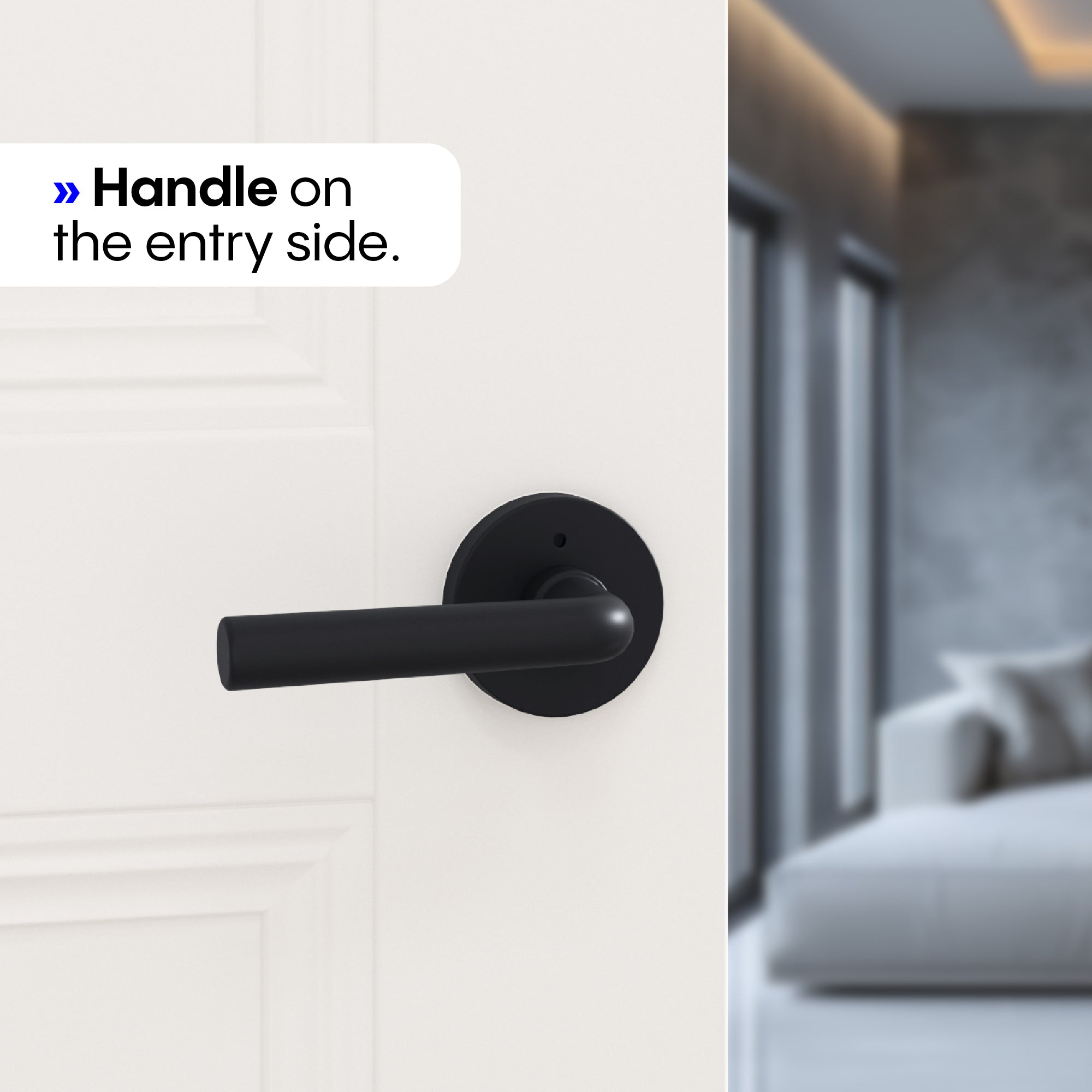
Yes, and if you followed the table above you already are. Mixing shapes looks deliberate rather than accidental as long as you hold three things constant.
Keep the finish identical. One finish across every handle in the house is what makes mixed shapes read as a decision. Matte black knobs with matte black levers looks considered; matte black levers with satin nickel knobs looks like two different projects.
Keep the rosette family consistent. Round backplates with round backplates, square with square. The plate against the door is more visible from down a hallway than the handle itself, and it's the detail that quietly ties a floor together.
Split by zone, not at random. Levers on the public and bedroom doors, knobs on the utility and containment doors, is a rule a visitor reads without noticing. A knob and a lever on two adjacent bedroom doors just looks like you ran out.
If you're working across more than one finish deliberately, our guide to mixing metals room by room covers where the boundaries should fall.
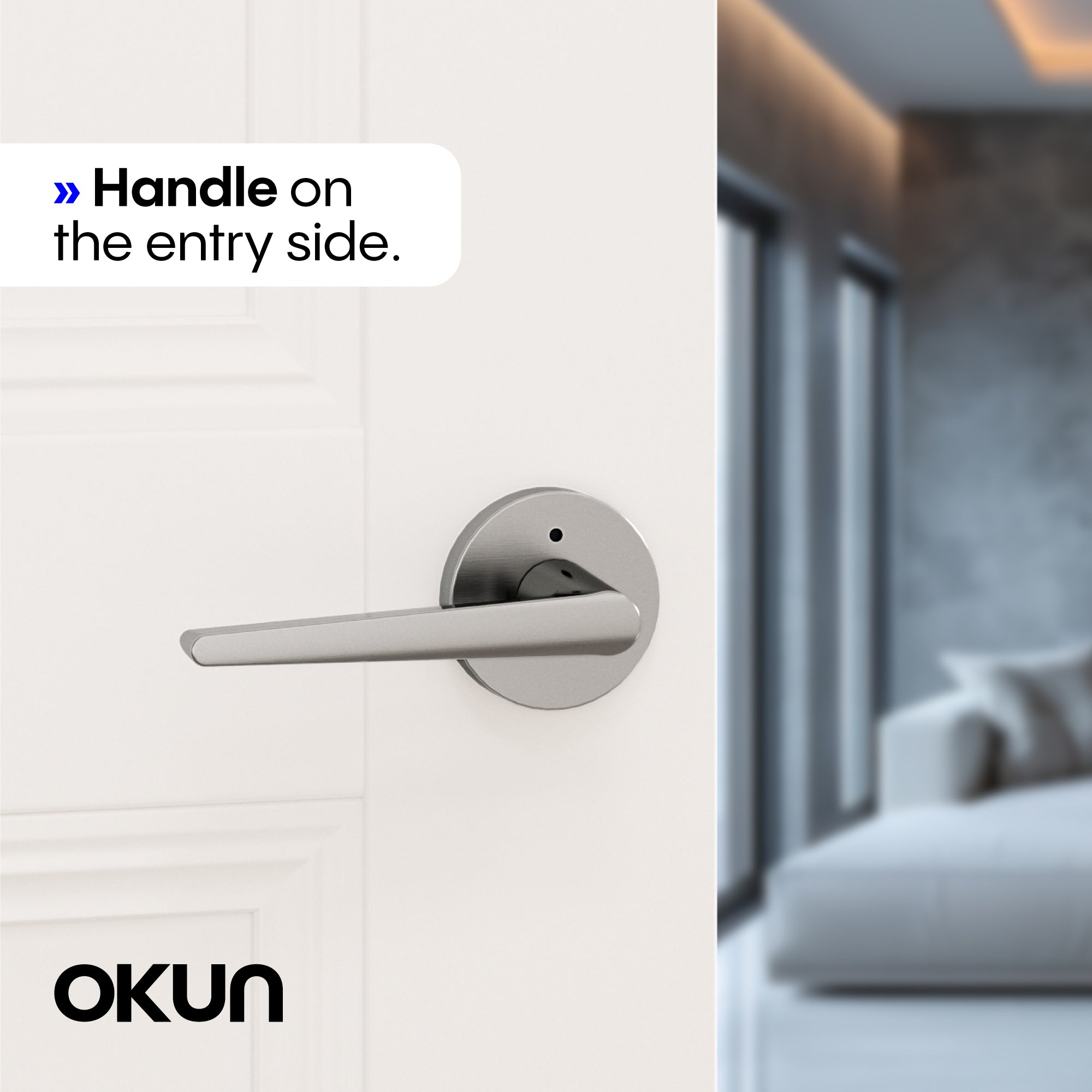
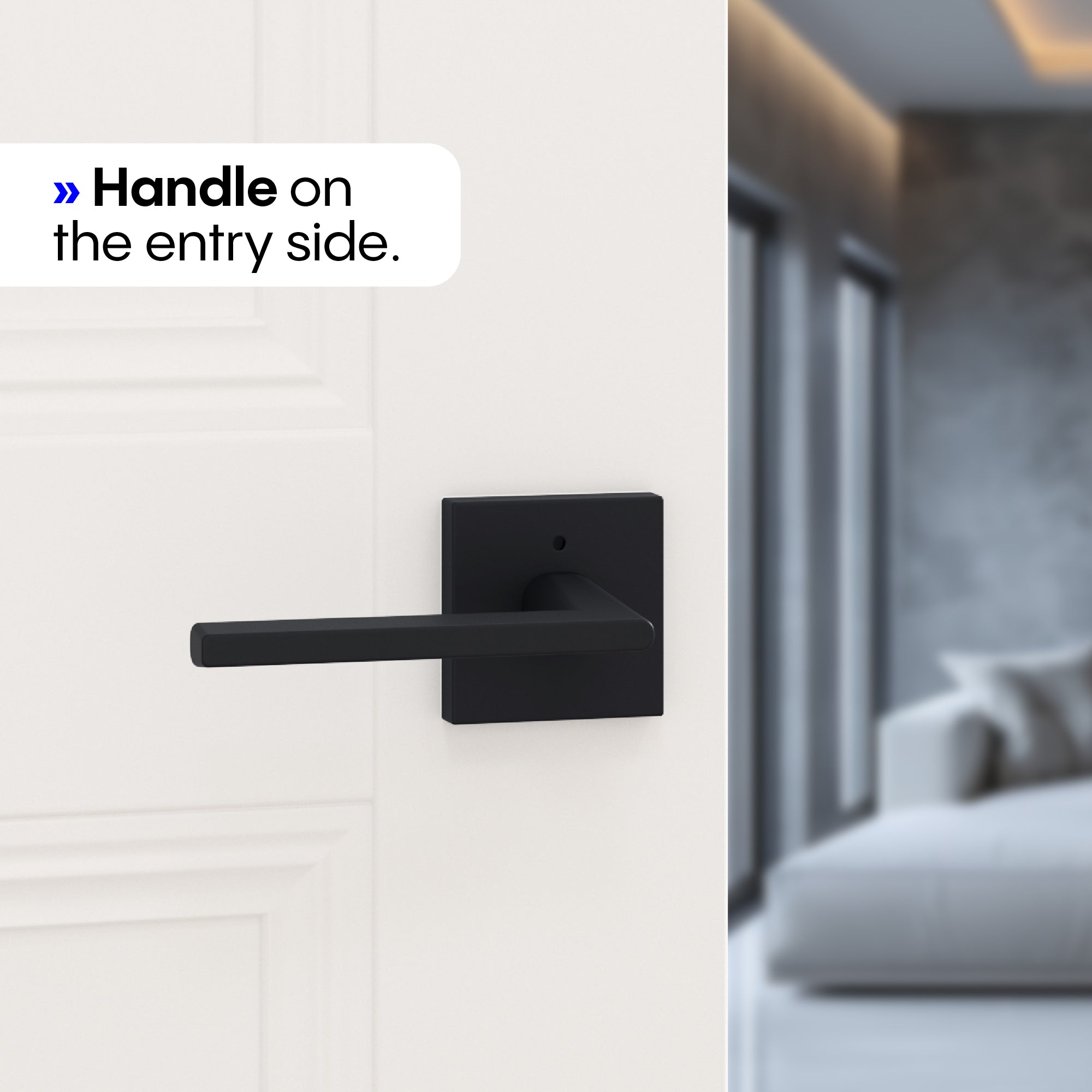
Can you swap a door knob for a lever?
Usually yes, in the same hole. Standard North American interior doors use a 2 1/8" bore, and a lever installs into the hole a knob came out of with no new drilling on a standard-prepped door. The reverse works too.
The exceptions are real but narrow: pre-1950s doors with mortise locks rather than tubular latches, non-standard bores on older or custom doors, and narrow stiles where a rosette won't cover the marks the old hardware left. Measure before you order rather than after — our guide to measuring backset, thickness and handing takes about four minutes and is the whole of the homework.
Once the parts are in front of you, it's a screwdriver job. The 15-minute install guide walks through a single door, and the second one always goes faster than the first.
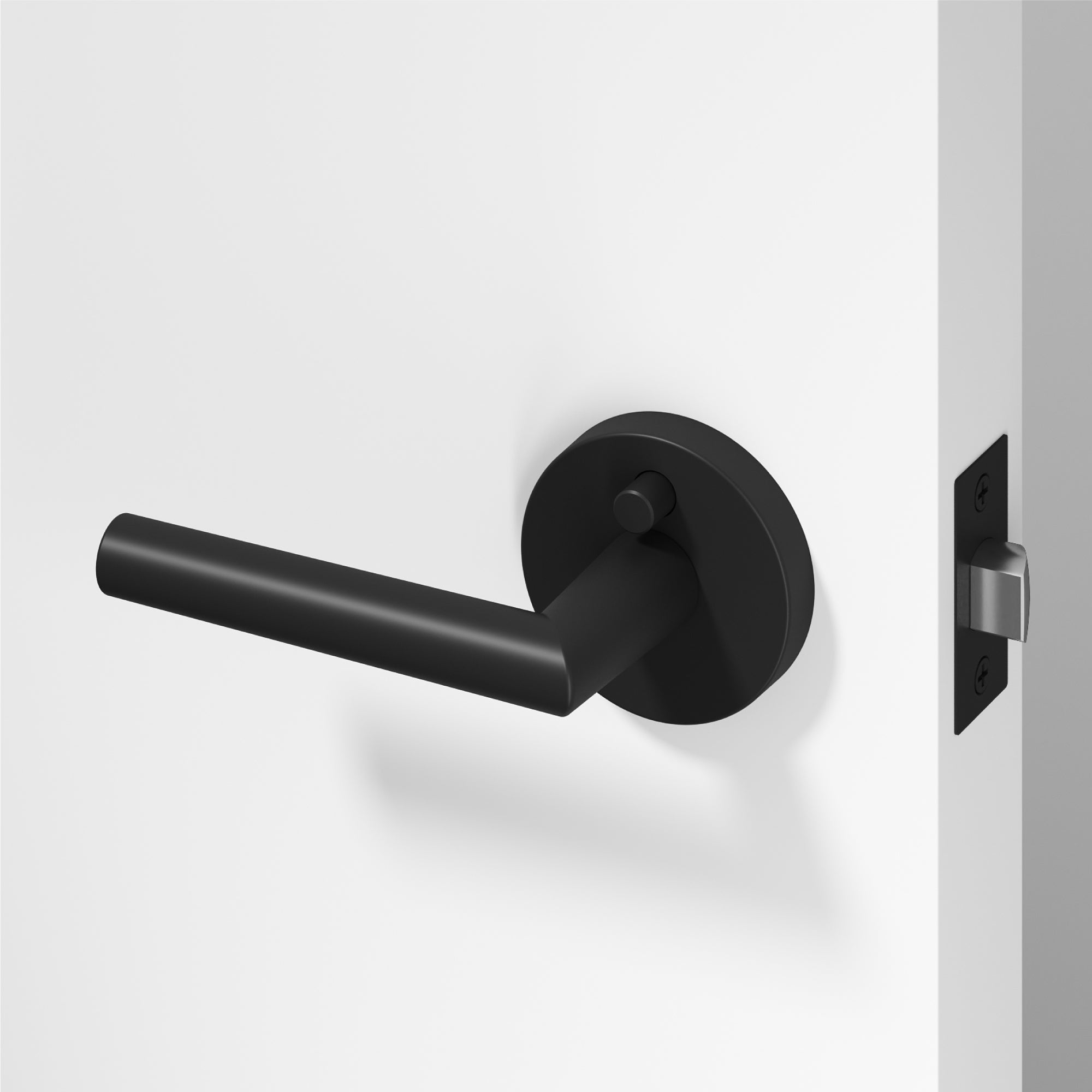
Why does OKUN make levers and not knobs?
Because the lever is the right answer on the large majority of doors, and building one shape properly beats building two shapes adequately. Every OKUN product is a lever — eleven designs across four PVD finishes — which is also why this guide has been straight with you about the doors where a knob wins. We'd rather you got the right hardware on the nursery than bought a lever you end up replacing.
Solid brass, not hollow zinc. A privacy set weighs about 2.6 pounds because the internals are brass rather than zamak. Weight is the proxy most people use for hardware quality, and in this case it is measuring the right thing — the plastic and pot-metal internals in budget locksets are what turn a ten-year handle into a six-month one.
A concealed-mount rosette. No visible screws on the face of the handle. It's the detail that most separates architectural hardware from builder-grade at a glance, and it costs manufacturers enough that most lines below the specifier tier skip it.
Four finishes across every collection and every function. Matte Black, Brushed Nickel, Chrome and Brushed Champagne Gold run across the whole range, so the passage lever in the hall, the privacy lever on the bedroom and the dummy lever on the closet all match — and so does the one you add in two years.
Everything in the box, and priced to do a whole house. Levers, adjustable latch, strike plate, screws, Allen wrench, and the emergency release tool on privacy sets. Dummy sets are $29.99, passage $49.99, privacy $59.99 — which is roughly what a single architectural handle costs from a specifier brand, and it's the reason people order for twelve doors at once rather than three.
For the full comparison against the brands you're probably also looking at, see OKUN vs Baldwin, Schlage and Emtek. And if you're wondering why we keep saying "lever" when everyone else says knob, we wrote about that too.
Frequently asked questions
What people ask when they're deciding between a door knob and a lever handle.
Can cats open lever door handles?+
Yes. Cats open levers by jumping at them, hanging from them, or swatting down with their body weight, and it is learned behaviour that often spreads to other pets in the house. A cat essentially cannot open a round knob, because that requires simultaneous grip and rotation. If you need one door to stay closed to a cat, a knob on that door is the reliable fix — or fit a privacy lever and engage the push-button so the outside lever spins free.
Can dogs open lever door handles?+
Taller and more persistent dogs do, by pawing or nosing the lever down, and owners frequently report one dog then letting the others out. Larger working and herding breeds come up most often. Some dogs eventually learn knobs by mouthing and twisting, but it is far rarer and much harder. A secondary latch mounted high on the door is the most durable solution if you want to keep the lever.
Are lever handles required by code in a house?+
No. The ADA does not apply to private residences, and the International Residential Code does not mandate handle shape in one- and two-family homes. Accessibility standards that do apply elsewhere specify performance — hardware operable with one hand without tight grasping, pinching or twisting of the wrist — rather than requiring a lever specifically. The widely cited lever requirement is a Vancouver, British Columbia building bylaw from 2014, which applies to one city.
Do lever handles catch on clothing?+
They can, and it is the most common genuine complaint about levers — pockets, sleeves, shirt tails, belt loops and bag straps, usually at pinch points like the end of a narrow hallway. Projection and shape matter: a lever that returns toward the door face snags far less than a straight bar ending in mid-air. If one specific doorway keeps catching you, that door is a legitimate case for a knob.
Are lever handles more modern than door knobs?+
As a design language, yes. The contemporary interior is built from horizontal lines — flush-panel doors, slim casing, linear lighting, handleless cabinetry — and a lever belongs to that grammar while a round knob interrupts it. The long low-profile Continental lever was a designer reference for years and is now the ordinary expectation in new North American interiors. On an original period door the reasoning reverses, and a knob is the correct choice.
Do door knobs look dated in 2026?+
It depends entirely on the house. On a modern or transitional door a contemporary lever reads current and a builder-grade knob reads tired. On an original Victorian, Craftsman or pre-war door the opposite is true, and glass, porcelain or unlacquered brass knobs are period-correct rather than dated. Knobs are also in active revival in design circles. Treat it as a question of what suits the door, not of what year it is.
Are door knobs or lever handles cheaper?+
Within the same product line they cost about the same. Price is driven by function, finish and material rather than shape — a privacy set costs more than a passage set because it holds a lock, a PVD finish costs more than sprayed lacquer, and solid brass costs more than hollow zinc alloy. Across twelve to fifteen interior doors those differences add up, which is an argument for picking one line and buying it across the house.
Should every door handle in a house match?+
The finish should. The shape doesn't have to. Mixing knobs and levers looks deliberate when the finish is identical, the rosette family is consistent, and the split follows a rule a visitor can read — levers on bedroom and living doors, knobs on utility and containment doors. A knob and a lever on two adjacent bedroom doors just looks unplanned.
Do door handles affect resale value?+
Not in any measurable way, and there is no data supporting a specific figure. Hardware is swappable in minutes, so a buyer who dislikes it changes it rather than discounting the house. What hardware does affect is the impression of a showing — mismatched handles, worn finish at the grip point and rattling levers read as deferred maintenance, while consistent hardware reads as a house that has been maintained.
Is a lever easier to force than a knob?+
The concern is that a lever gives an intruder mechanical advantage to torque the lockset, and it is a real consideration on exterior and institutional doors, where clutch levers that free-spin under force exist to address it. On interior doors it is largely irrelevant: those carry privacy latches rather than security locks, and a hollow-core door is the weak point regardless of hardware shape.
Which way should a lever handle point?+
The lever points back toward the hinge side of the door, so it moves away from the frame as you push down. Getting this backwards is the most common install error on a lever. OKUN levers are reversible for left- and right-hand doors with no extra parts, so it is set during installation rather than chosen at the point of order.

Eleven levers. Four finishes. One house.
Solid brass internals, concealed-mount rosettes, everything in the box, and a shape that fits standard bores. Mark your exceptions, then do the rest in an afternoon.
Shop All Door Handles Shop Privacy LeversProduct photography: OKUN. Interior photography via Unsplash — McFollis, Marina Nazina, Shyam, Lotus Design N Print, Sven Brandsma, Zac Gudakov, Caroline Badran.
OKUN
the little details make a big difference
Designed in NYC