

Design Journal
What Makes a Door Handle "Luxury"?
High-end interior hardware runs $80 to $150 a lever. Four things account for nearly everything you'd actually notice — and three of them cost almost nothing to get right.

What actually makes a door handle "luxury"?
Four things: solid rather than hollow metal, a finish bonded into the material rather than plated on, no screws on the finished face, and short quiet travel in the mechanism. All four are achievable well under luxury pricing. What genuinely sits above them is material exotica and bespoke work.
Key Takeaways
- Weight is the first thing you register. Hollow zinc can't fake it, and photographs can't show it — which is why cheap hardware photographs so well.
- Most of the price gap isn't material. Distribution, low volumes and brand carry more of it than the metal does.
- The visible difference stops early. Between roughly $30 and $60 a lever you get nearly everything a person can see or feel.
- Above that, you're buying real but narrow things — solid cast brass, custom door levers made to order, hand-applied patina, lifetime warranties.
- Installation is identical at every price. Fifteen minutes and a screwdriver, whether the lever cost $30 or $130.
The four things that actually change how a handle feels
Strip away the language and there are only four variables a human being can detect on an interior door lever — and they apply equally to luxury door knobs and to levers. Everything else is specification that never reaches your hand.
1. Weight

Pick up a builder-grade lever and a well-made one and the difference arrives before you've looked at either. Hollow zinc alloy is light and slightly resonant; solid metal has mass and deadness to it.
This is the single most reliable quality signal there is, and it's also the one that cannot survive a product photograph. Which is precisely why so much hardware is sold on styling alone — the camera flatters the cheap one and tells you nothing about the expensive one.
2. How the colour is attached
A plated or powder-coated finish sits on top of the metal as a discrete layer. It wears through at the thumb contact point and chips to a bright spot. A PVD finish is deposited into the surface in a vacuum chamber, so there's no layer to lift.
Same colour on the shelf. Completely different object after four years of a family using it.
3. Whether you can see the screws
Two crossheads on the face of the backplate, on every door, forever. It's the most visible difference between hardware that reads as considered and hardware that reads as installed, and it's an assembly decision rather than a material one — the screws cost the same either way.
4. The travel
How far the lever moves before the latch releases, whether the return feels sprung or dead, and whether it makes a click or a clatter. That's tolerances and spring quality. It needs precision, not exotic materials.
Three of the four cost almost nothing extra. That's the entire uncomfortable finding.
So where does the money go?
If the four things above don't require luxury pricing, the obvious question is what a $130 lever is charging for. Materials are part of it, but a smaller part than most people assume — and the breakdown is much the same across high end interior door hardware generally, whether the piece is a lever, a knob or a pull.
| Cost driver | What it is | Do you feel it? |
|---|---|---|
| Distribution | Specifier and showroom channels carry margin at several stages between factory and door — rep networks, showroom floor space, trade discounts built into list price. | No |
| Low volume | Deep collections in many finishes mean short production runs and slow-moving stock, both of which raise unit cost. | No |
| Brand equity | Decades of specification history and designer relationships. Real value to an architect writing a schedule; invisible on the door. | No |
| Material | Solid cast brass or bronze rather than plated alloy. Genuine, and genuinely more expensive. | Slightly |
| Bespoke work | Made-to-order sizes, hand-applied patina, custom finishes matched to a project. | Yes — if you need it |
Selling direct removes the first driver entirely, which is most of why the same design language reaches a different price. The construction argument sits in our piece on architectural versus builder-grade hardware.
Where the visible difference stops
This is the part worth internalising before you spend anything.
The jump from builder-grade to well-made is dramatic and anyone can feel it. The jump from well-made to specifier-priced is real but narrow — you're buying material, bespoke capability and warranty rather than a difference your hand can report.
Which is not an argument against high-end hardware. If you're matching an unusual door size, want unlacquered brass that patinates with handling, or need a hand-applied finish across a whole project, that tier exists for exactly those reasons and nothing else will do.
The honest version: most people searching for luxury door handles aren't after cast bronze or bespoke sizing. They want their doors to stop feeling cheap. That's a solved problem well below the price the word implies.
What it costs per door, and per year

Worth putting the numbers beside each other, because the abstraction does a lot of hiding.
| Per lever | Passage | Privacy | Dummy |
|---|---|---|---|
| OKUN | $49.99 | from $59.99 | $29.99 |
| Architectural / specifier tier | ~$80–$150 | often higher | ~$60–$100 |
Installation is the same either way — fifteen minutes, one screwdriver, no drilling if the door is already bored. So the entire difference sits in the hardware, not the project. Our budget guide works out whole-house totals if you're costing more than one door.
Spread across a decade of daily use, a $50 lever is well under a cent a day. So is a $130 one. At that point the question isn't affordability — it's whether the extra eighty dollars is buying anything you'd notice, which for most interior doors it isn't.
How to judge a listing yourself
Four checks, no brand knowledge required. They work on any product page, ours included.
- Does it state weight or say "solid"? Hollow construction is rarely advertised. Silence on the point is itself informative.
- Does it name the finishing method? "PVD" or "physical vapour deposition" is a specific claim. "Beautiful matte black finish" is not.
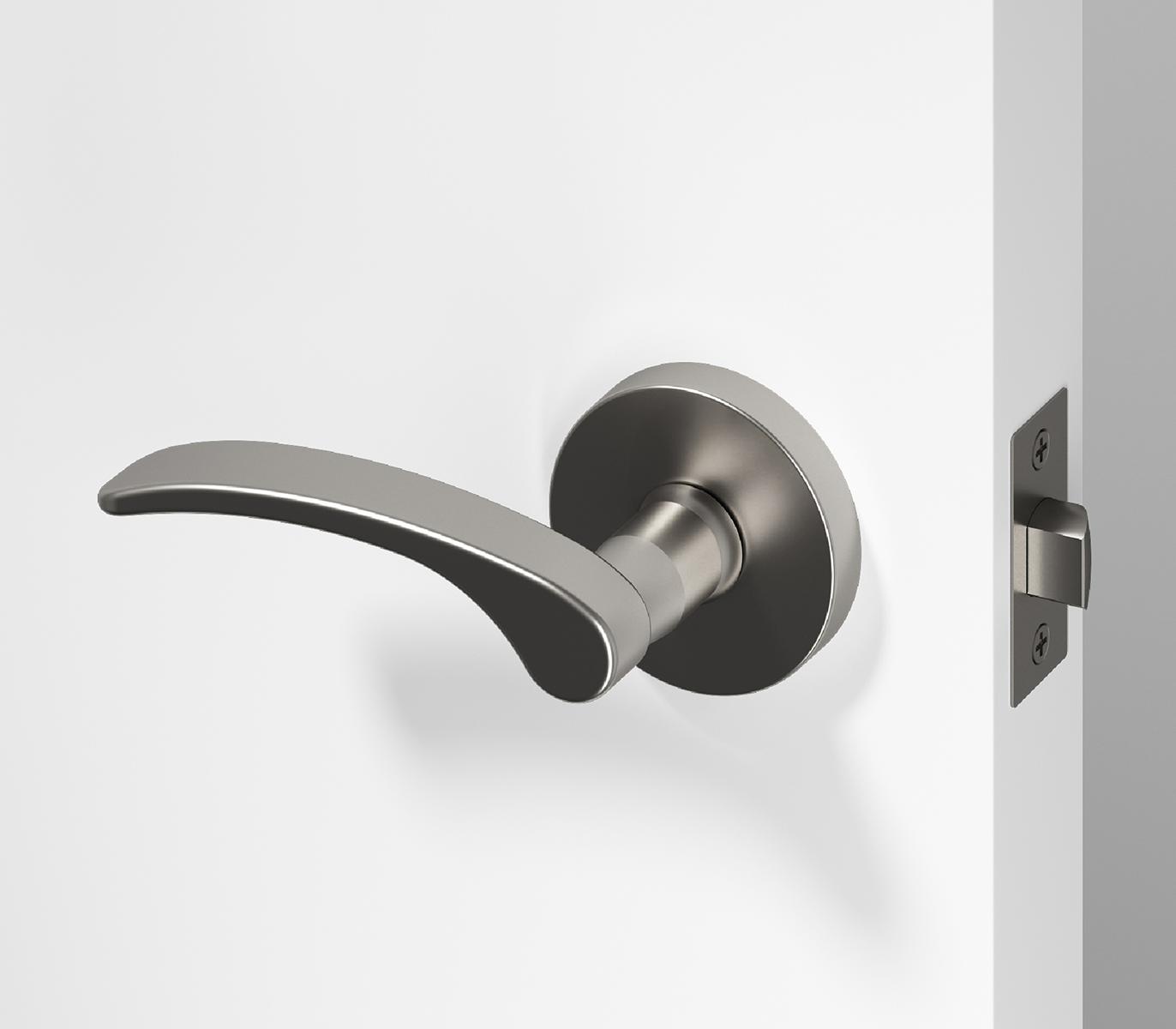
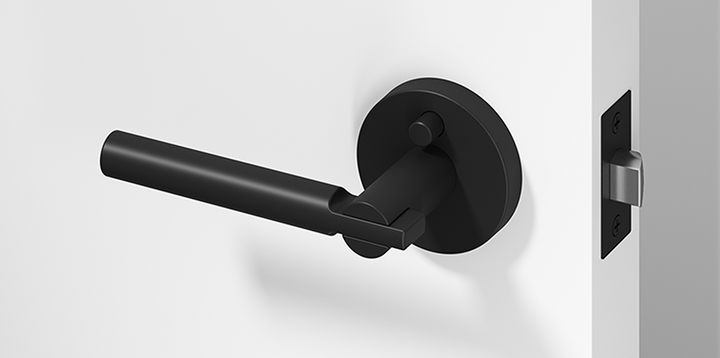
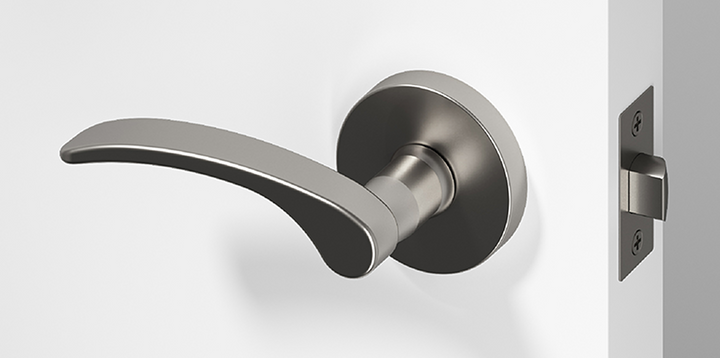
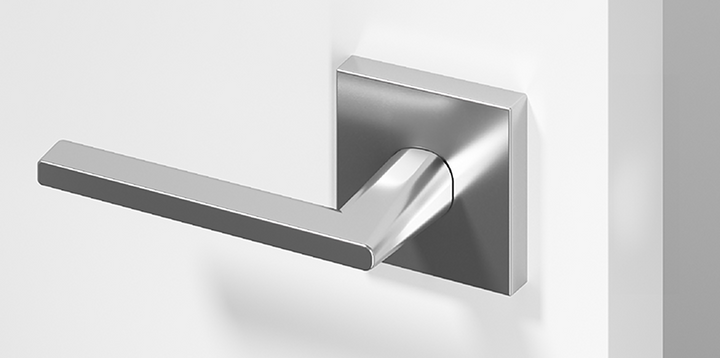
- Is there a straight-on photo of the rosette? Zoom it. Two small circles at twelve and six are mounting screws. Listings that only show dramatic angles are sometimes avoiding the question — more on spotting concealed mounting.
- Does the description sell the object or the feeling? Pages heavy on lifestyle language and light on specification are usually compensating.
What we'd actually say
We sell hardware in the $30 to $60 band, so read the following with appropriate suspicion — but it's what we'd tell a friend.
Buy the four things that matter. Solid metal, a bonded finish, nothing on the face, and a mechanism that closes quietly. If a handle has those, it will feel expensive for as long as you own it, and nobody who walks through your hallway will be able to tell you what it cost.
If you also need cast bronze, a bespoke length or a finish that ages with handling, buy those on purpose from someone who specialises in them. Just don't pay for them by accident because the word "luxury" was on the page.
Frequently Asked Questions
Four things account for almost everything a person notices: solid rather than hollow construction, a finish bonded into the metal rather than plated on top, concealed mounting with no screws on the finished face, and a mechanism with short quiet travel. None of the four requires luxury pricing. What genuinely sits above them is material exotica, bespoke sizing and hand-applied finishes.
Specifier and architectural interior levers typically start around $80 and run to $150 or more per handle, before any locking function is added. Builder-grade sits under $25. The band between roughly $30 and $60 is where most of the visible and tactile difference is actually delivered.
Moving from builder-grade to well-made hardware is clearly worth it, because weight, finish durability and concealed mounting are all noticeable every day. Moving from well-made to specifier-priced hardware buys real things — solid brass, bespoke sizes, hand-applied patina, lifetime warranties — but very little that a guest or a photograph would register.
Materials account for less of the price than most buyers assume. The larger factors are distribution — showroom and specifier channels carry margin at several stages — along with low production volumes, extensive finish ranges held in stock, and brand equity. A handle sold direct avoids most of the first factor entirely.
Genuine exclusives are solid cast brass or bronze rather than plated alloy, made-to-order sizes for non-standard doors, unlacquered living finishes that patinate with handling, hand-applied patina, and lifetime mechanical warranties. These are real advantages for specific projects rather than general improvements everyone would notice.
Look for a stated weight or a description of solid rather than hollow construction, the finishing method named explicitly as PVD or physical vapour deposition, and a straight-on photograph of the rosette showing no screws on the finished face. Listings that describe only style and colour are usually avoiding the specification.
Longevity tracks construction and finishing method rather than price. Solid metal with a bonded finish outlasts hollow metal with a plated one, and that difference is available at moderate prices. Above that point additional spending buys material and warranty rather than a meaningfully longer service life on an interior door.
OKUN interior levers run $29.99 for dummy, $49.99 for passage and from $59.99 for privacy. Comparable architectural hardware generally starts around $80 and reaches $150. Since installation is identical either way — roughly fifteen minutes with a screwdriver — the whole difference sits in the hardware itself.
Keep Reading
- Architectural vs. Builder-Grade — where the construction line sits
- Durability & Care — what happens to a finish after year one
- What Buyers Say — 40 reviews, and the word that keeps coming up
Premium door handles for less.
Solid metal, PVD finishes, concealed mounting — $29.99 to $59.99 a door. Eleven collections, four finishes.
OkunThe little details make a big difference. © 2026 OKUN.