

Design Journal
What Is OKUN? The Design Idea Behind the Hardware
Nobody has ever thrown a dinner party and been complimented on their door handles. We've made our peace with that. It is, in a roundabout way, the entire business plan.

What is OKUN?
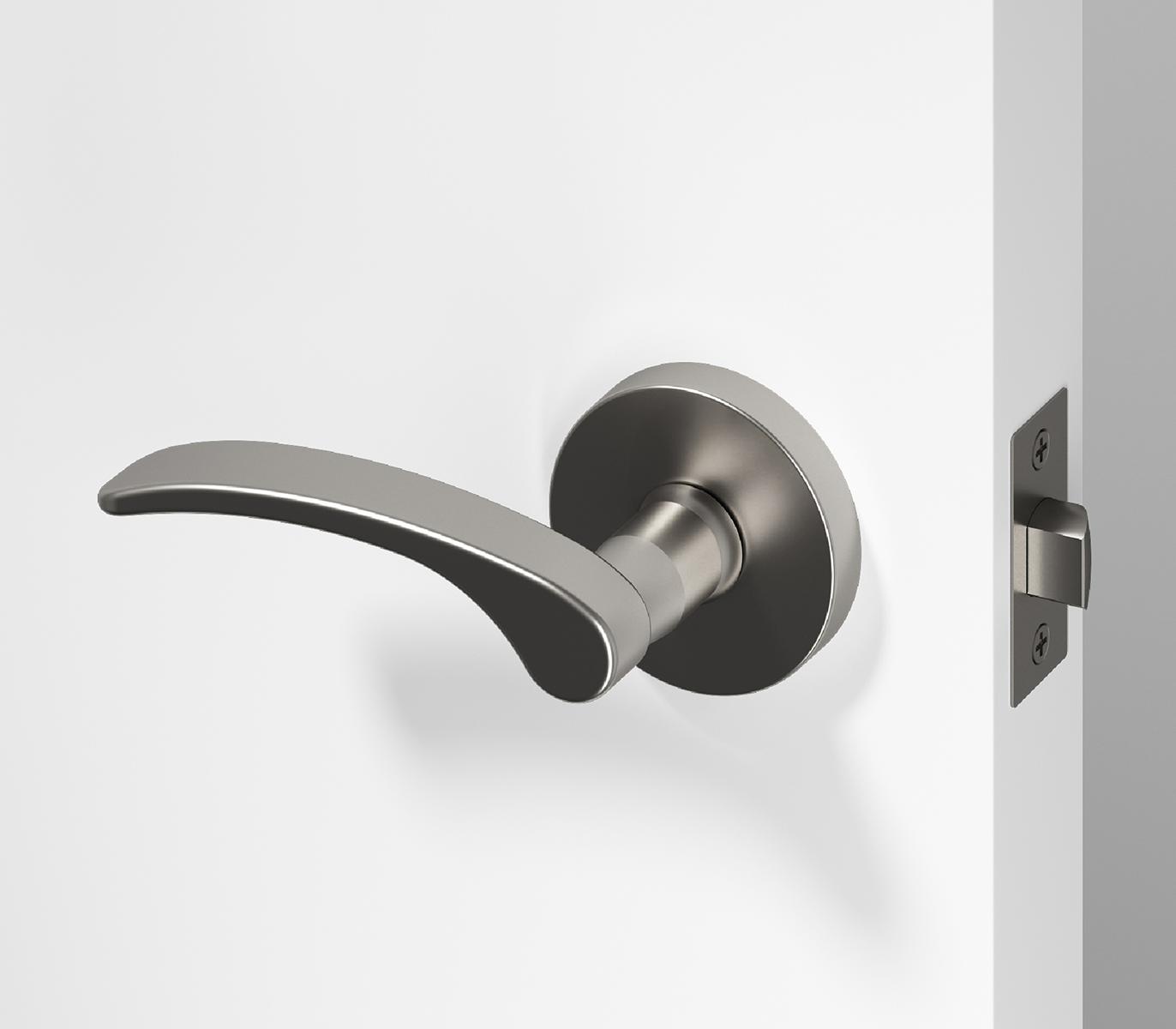
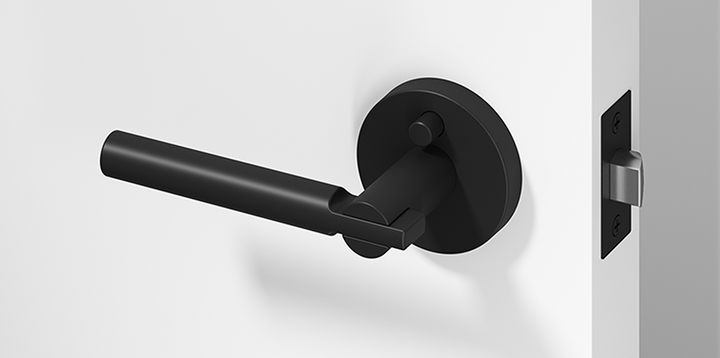
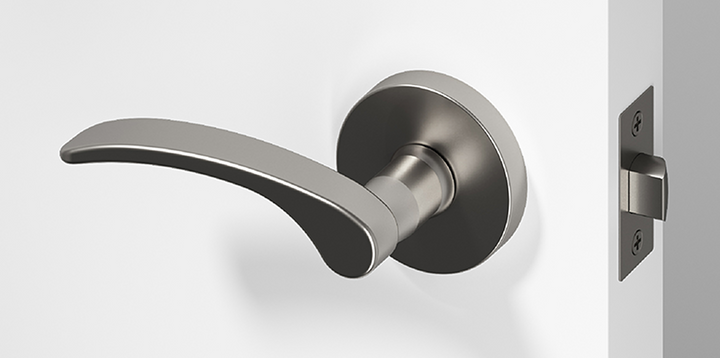
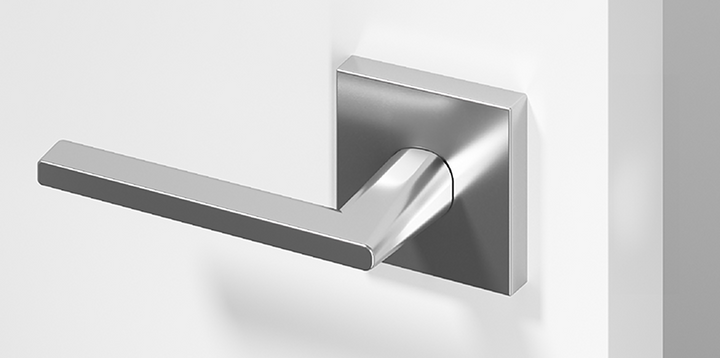
OKUN is a New York City design house making architectural hardware for interiors — lever door handles and vent grilles. We sell direct rather than through showrooms, which is how architectural design reaches a mainstream price. Eleven collections, three functions, four finishes.
Key Takeaways
- A lever is a control surface, not an ornament. Weight and travel get judged before shape does, because your hand gets there first.
- The habit comes from the buildings. Repeat a module, size it for the load, then leave it alone.
- Two screws tell you almost everything. Front-mounted fixings are an assembly-time decision somebody made on your behalf.
- The omissions are the argument. No exterior hardware, no ornament, no single hero finish, no showroom.
- Consistency is the product. Four finishes across eleven collections and three functions, so nobody has to accept "closest available."
The only part of a building you operate
Here's something that took us an embarrassingly long time to say out loud: almost none of a house moves.
Walls hold still. Floors hold still. The window, if you're lucky, opens twice a summer. The door is the exception, and the lever is how you drive it, several dozen times a day, usually one-handed, usually while carrying laundry or a mug or a small furious child.
So a lever isn't decoration. It's a control surface, and it gets judged by your hand a fraction of a second before your eye is consulted at all. The hand is the harsher critic of the two, mainly because it can't be talked round. You can light a lever beautifully and shoot it against a limewash wall and put it on a mood board. Pull it three times and you'll know.
Which is why we work weight first and everything else after. That's roughly the reverse of how a lot of hardware gets drawn, and about half the reason this company exists.
The eye can be talked round. The hand just tells you.
Where the drawings come from

New York, and not in the branding sense.
Manhattan mostly admits what it's made of. A curtain wall repeats one module a few hundred times and doesn't apologise for it. Concrete stays concrete. A steel section gets sized for its load and then, crucially, left alone; nobody turns up afterwards to add a flourish.
That's a habit more than a look, and the habit is what we've tried to steal. A lever is a line with a radius on the end. A rosette (a genuinely silly word for a metal disc, but we're stuck with it) is a circle. Neither is pretending to be a leaf.
The part that actually eats time is invisible. How long the lever runs against how far it stands off the door. How the disc reads against the width of a stile. Nobody will ever notice you got that right. They will absolutely notice if you got it wrong, though they'll blame the paint colour.
Eleven collections is arguably too many, and we've had that argument internally more than once. But Stark and Valli want a tight rectangle, Zen and Brio want to be round, Halo wants a tall door, and Mirra and Quadra want the geometry said out loud. Same vocabulary, eleven things to say in it.
Two screws, and the argument behind them
Now the thing we'll corner you about at parties.
Look at most door hardware and you'll find two crossheads sitting on the front of the backplate. Dead centre, at eye level, on every door in the house, until the house falls down.
The reason isn't cost. A screw costs the same whichever side it goes in from. It's assembly time: a fastener you can reach from the front goes in faster on a line, and across a production run that saved minute is worth more to somebody than what the finished object looks like. So those screws aren't an oversight. Someone ran the numbers and concluded you wouldn't mind.
We think you do mind. Or at least that you'd stop minding several other things if that one got fixed. Ours go in from behind the rosette and the face stays shut.
This isn't free, and we'd rather say so. It adds a step in assembly, it makes the factory's life harder, and if you ever do need to get at a fixing you're taking the rosette off first. We've had the conversation about dropping it. We keep not dropping it.
What sits underneath (solid metal rather than hollow, a PVD finish bonded into the material instead of plated onto it) gets covered properly in our architectural versus builder-grade piece, and measured against specific brands in the Baldwin, Schlage and Emtek comparison. This piece is about why we bothered, not how it stacks up.
What we've chosen not to make
A brand usually gets described by its range. We'd rather be judged on the omissions, partly because they were the harder calls and partly because a range is very easy to pad.
| Not made | Why not |
|---|---|
| Entry sets, deadbolts, keyed and smart locks | Exterior security is a different engineering discipline with different standards. Doing it adequately would mean doing interiors less well. We stay inside. |
| Ornamental and revival styles | They are a legitimate tradition, and other brands do them properly. Ours is a modern architectural vocabulary; adding scrollwork would make it a catalogue rather than a point of view. |
| A single hero finish | Tempting commercially — one finish is far simpler to stock. But a house has many doors, and hardware only reads as intentional when it agrees with itself. |
| A showroom network | Distribution markups are most of why architectural hardware costs $80 to $150 a lever. Selling direct is what puts the same design at $29.99 to $59.99. |
The last two are connected, and they're the commitment we'd defend hardest. Because all four finishes run across all eleven collections and all three functions, a bedroom privacy lever, a hallway passage lever and a closet dummy can be specified in the same silhouette and the same finish, with no substitution and no "closest available."
Which sounds like a stock-keeping footnote and is actually the whole product. You see interior doors in sequence, several at a time, at hand height. Consistency across them is doing all the perceptual work, and there isn't another mechanism available.
The same interrogation, applied to a vent

Once you start looking at the parts of a room nobody chose, it gets hard to stop, and mildly ruinous to your enjoyment of hotels.
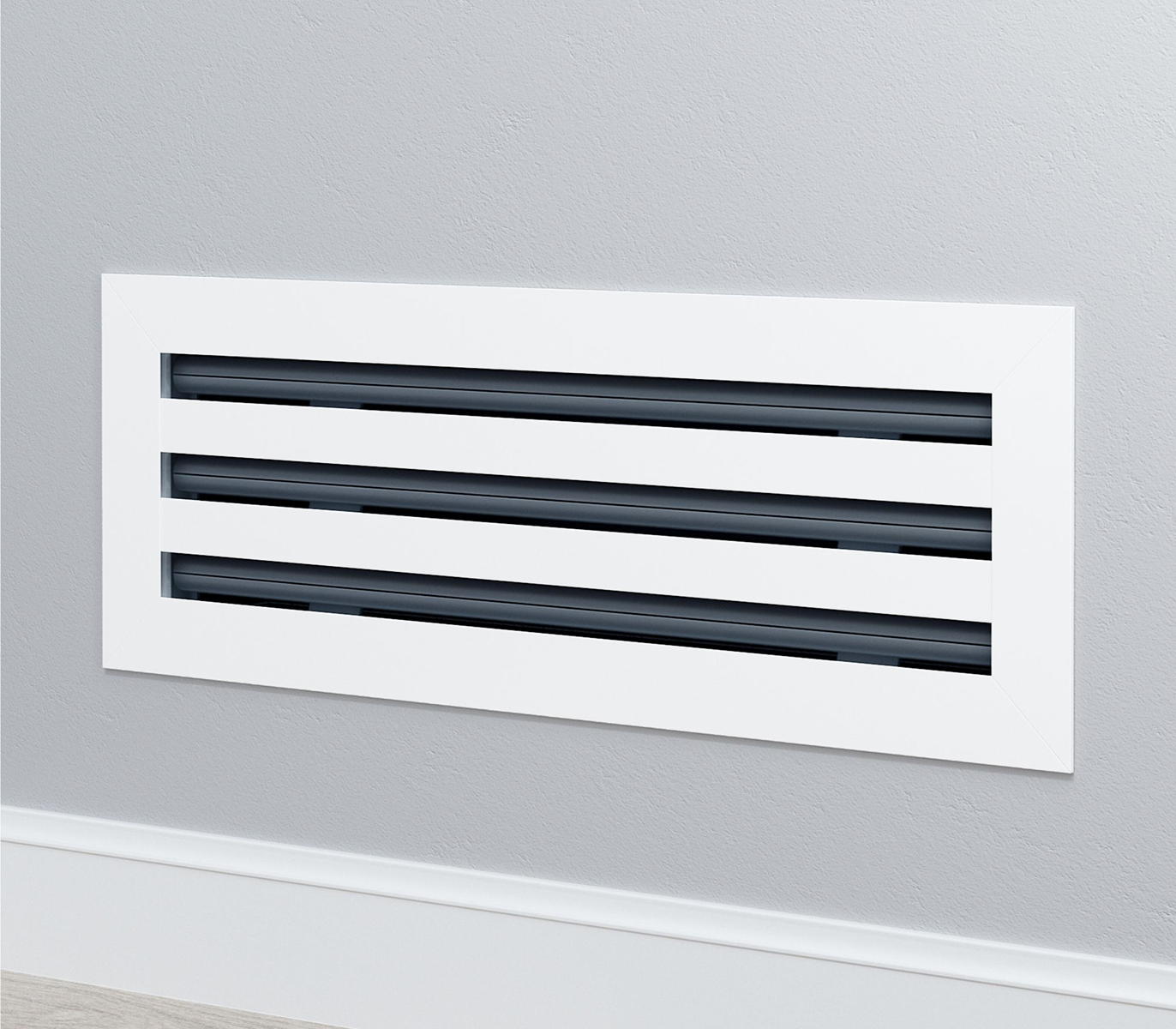
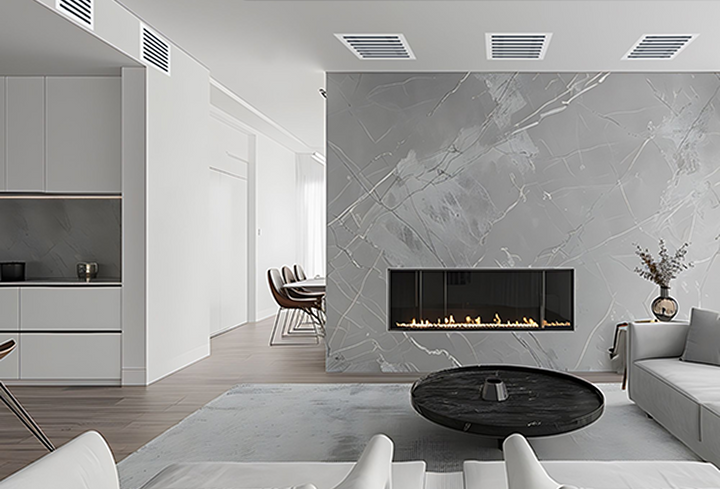
The register is the worst offender. Nobody picks it. Nobody is asked. It shows up as stamped plastic in an approximate white, sitting slightly proud of a ceiling somebody spent real money on, and fitted a few degrees off square.
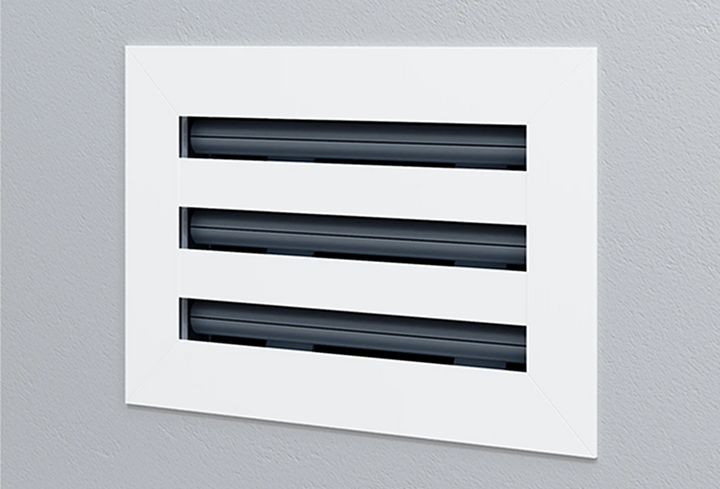
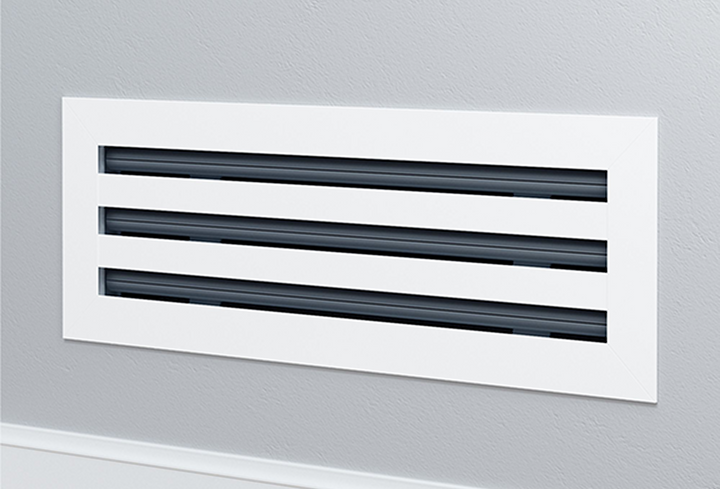
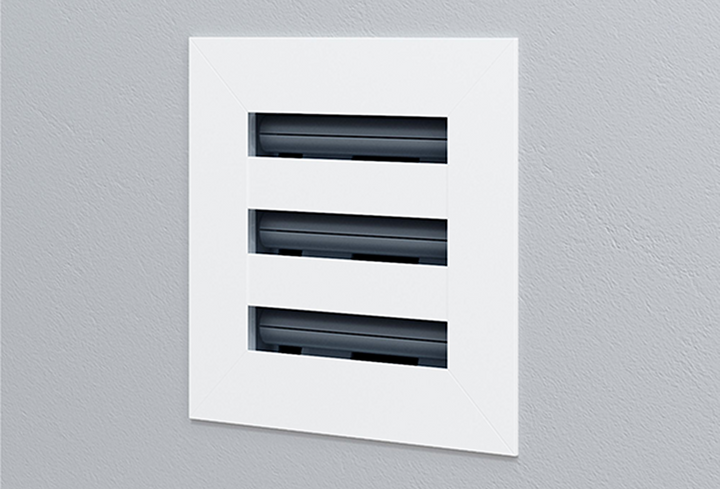
So the grilles came out of the same line of questioning as the levers, which is less how do we make this beautiful and more who signed off on this, and what happens if we don't. Aluminium instead of plastic, fixings hidden, profile flush.
What actually changes

The changeover is aggressively unglamorous. A screwdriver, about fifteen minutes a door, one Saturday, and you can do the whole house in socks with something on in the background.
Then for a week your hand files reports. Heavier than expected. Shorter travel. The door pulls to instead of thumping. After that the reports stop, because your hand has recalibrated and there's nothing left worth flagging.
That's the entire event. Nobody is going to visit and admire your levers. If anything they'll say the hallway looks different and then guess, wrongly, that you repainted.
We're fine with that. It's the plainest reading of form following function we can manage: don't add anything that isn't carrying load, and let the room take the credit.
Frequently Asked Questions
OKUN is a New York City design house making architectural hardware for interiors — lever door handles and vent grilles. It sells direct to consumers rather than through showrooms or distributors, which is how architectural design reaches a mainstream price. The interior lever range spans eleven collections, three functions and four finishes.
OKUN hardware is designed in-house in New York City. The vocabulary is borrowed from the buildings — the repeat of a curtain-wall module, the flatness of poured concrete, a steel section sized for its load and then left alone — and rebuilt at the scale of a thing you close your hand around.
One detail carries most of it: a concealed-mount rosette with no screws on the finished face. Builder-grade hardware leaves mounting screws visible on the backplate, and once you notice them you cannot stop noticing them. Beyond that, OKUN uses solid metal rather than hollow construction, and PVD finishes bonded to the metal rather than plated on top.
OKUN is designed in New York City. The company describes its pieces as meticulously crafted from premium materials — solid 304-grade stainless steel and brass, finished by physical vapour deposition — and sells them directly through okunusa.com and Amazon rather than through a showroom network.
No, and this is deliberate. OKUN makes interior hardware only — no entry handlesets, no deadbolts, no keyed or smart locks, nothing rated for exterior exposure. Staying inside one category is what allows every collection to be offered in every function and every finish, which is what makes whole-home consistency possible.
Because a home is not one door. Interior doors are seen in sequence as you move through a house, so hardware only reads as designed when it agrees with itself. Offering all four finishes across all eleven collections and all three functions means a bedroom privacy lever, a hallway passage lever and a closet dummy can match exactly.
OKUN sits between mass-market brands like Kwikset and Schlage and architectural brands like Baldwin and Emtek — closer to the latter in design language and construction, closer to the former in price. Interior levers run $29.99 to $59.99 depending on function, against roughly $80 to $150 for comparable architectural hardware.
That the parts nobody deliberates over are doing more work than the parts everybody does. A lever with real mass, a rosette fixed from behind, one finish held across every door — individually trivial, collectively the reason a hallway either feels resolved or doesn't, long after anyone can point at why.
Because the same question applies. A stamped plastic register is the other object in a room that nobody chose and everybody sees. OKUN's grilles use powder-coated aluminium, concealed mounting and a flush profile — the same reasoning as the levers, applied to a different overlooked part.
Your hand stops reporting on it. For the first week after a change you register the mass, the travel and the way the door closes; after that the feedback stops, because there is nothing unexpected left to flag. Hardware that has been done properly ends up costing you no attention at all.
Keep Reading
- Architectural vs. Builder-Grade — where the quality line sits, measured
- OKUN vs. Baldwin, Schlage & Emtek — construction and materials compared
- Passage, Privacy & Dummy — which function belongs on which door
- How Long Do OKUN Handles Last? — durability and thirty-second care
- Architectural Grilles — the same idea, applied to vent covers
Eleven collections. One argument.
Drawn in New York. Fixed from behind. Every function, every finish.
OkunThe little details make a big difference. © 2026 OKUN.